Should I Launch on Douyin or Tmall First?
Should I Launch on Douyin or Tmall First?
Your first platform choice shapes your content strategy, team, budget, and timeline. Here is a structured framework to help you decide between Douyin and Tmall Global.
Why Your First Platform Choice Defines Everything
The decision to launch on Douyin or Tmall first is one of the most consequential choices a foreign brand makes when entering China. It determines your content strategy, your team composition, your budget allocation, and your timeline to first revenue. A brand that starts on Tmall Global builds a product-listing-first operation. A brand that starts on Douyin builds a video-production-first operation. These require fundamentally different capabilities.
Choosing the wrong first platform typically wastes 6–12 months and a significant portion of your initial budget, because the content, operations, and team structure you build for one platform does not transfer cleanly to the other. Worse, if you underperform on the wrong platform, the internal narrative becomes "China didn't work" — when the real issue was channel selection.
This guide provides a structured decision framework. By the end, you will know which platform fits your brand's product, budget, and capabilities — and have a clear rationale for the choice. For most foreign brands, the answer is Tmall Global first. But there are specific scenarios where Douyin makes more sense as a starting point.
Tmall Global vs Douyin: The Core Difference
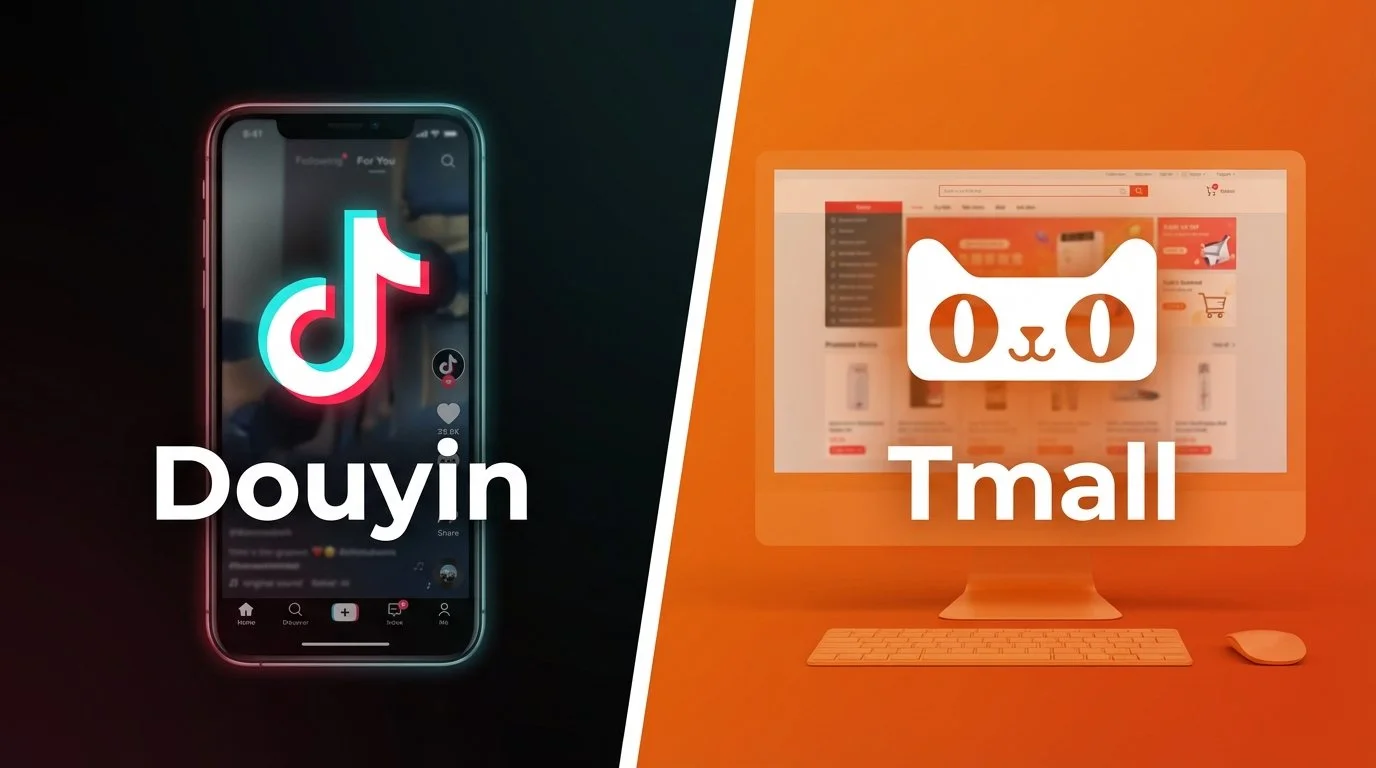
The fundamental difference between Tmall and Douyin is the consumer mindset at the moment of purchase. On Tmall, consumers search for products they already want. On Douyin, consumers discover products they didn't know they wanted. This distinction drives every other difference between the platforms.
- Consumers search with purchase intent
- Product listings and reviews drive conversion
- Brand flagship store builds long-term equity
- Lower return rates (rational purchases)
- Cross-border model — no Chinese entity needed
- Alibaba ecosystem (Alipay, Cainiao logistics)
How Each Platform Actually Works for Foreign Brands
Understanding the mechanics of each platform helps clarify which one your brand is equipped to operate on from day one.
Tmall Global: The Flagship Store Model
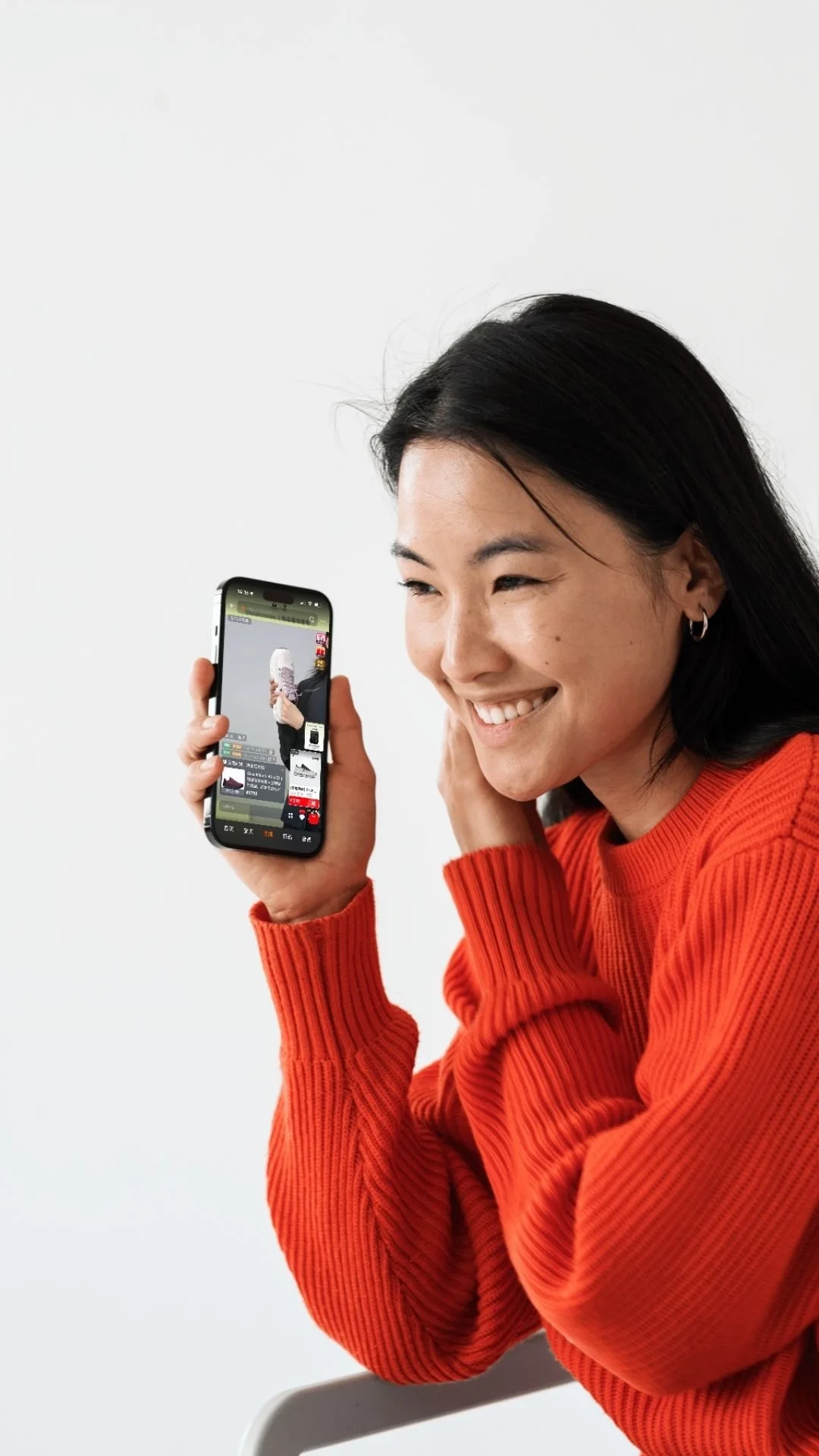
On Tmall Global, you open a branded store — your own storefront within Alibaba's marketplace. Your store has product listings with professional images, detailed descriptions, customer reviews, and pricing. Consumers find your store through search (typing "vitamin C serum" or your brand name), through category browsing, through Tmall's recommendation algorithm, or through paid search ads (Zhitongche).
Revenue comes primarily from organic search rankings (driven by reviews, sales velocity, and listing quality), paid advertising within the platform, and participation in major shopping festivals like 11.11 and 6.18. The operational model centers on listing optimization, inventory management, customer service, and advertising campaigns. Most foreign brands work with a Tmall Partner (TP) to handle these operations.
Douyin Shop: The Content-Commerce Machine
On Douyin, commerce is embedded within a content platform. Products are sold through short videos (15–60 seconds) and livestreams (typically 2–6 hours). The algorithm surfaces your content to users based on engagement signals — watch time, likes, shares, and comments — not search keywords. If a video resonates, it can reach millions of users organically. If it doesn't, it reaches almost nobody.
This creates a high-variance model. A single viral video can generate thousands of orders in a day. A week of underperforming content can generate almost zero. The operational model revolves around content production — you need a constant pipeline of videos, a livestream schedule, and often KOL (key opinion leader) partnerships. The content must be native to Douyin's format: fast-paced, entertaining, and visually compelling.
The Real Cost Comparison
Budget is often the deciding factor for foreign brands evaluating which platform to launch on first. The cost structures are meaningfully different.
| Cost Category | Tmall Global | Douyin Shop |
|---|---|---|
| Store deposit | $5,000–$25,000 (refundable) | ~$2,000–$5,000 |
| Annual platform fee | $5,000–$10,000/year | Lower or waived |
| Commission rate | 2–5% per transaction | 1–5% per transaction |
| Content production | Lower — product photos, A+ content | High — daily videos, regular livestreams |
| Advertising budget | €2,000–€8,000/month typical | €3,000–€10,000/month for paid traffic |
| TP/partner fees | Monthly retainer + commission | Higher due to content production |

Content and Team Requirements
The team you need — and the content they produce — differs dramatically between platforms. This is where many brands underestimate the commitment required for Douyin.
| Requirement | Tmall Global | Douyin Shop |
|---|---|---|
| Core content | Product photography, A+ detail pages, banner graphics | Short videos (3–5 per week minimum), livestreams (2–4 per week) |
| Content language | Chinese product listings (TP handles translation) | Native Chinese video scripts, presenters, and captions |
| Key team roles | Store manager, customer service, ad specialist | Video producer, livestream host, scriptwriter, editor |
| Content refresh cycle | Seasonal updates, festival campaigns | Daily — Douyin's algorithm penalizes stale accounts |
| Brand HQ involvement | Moderate — approvals, product info, strategy | Higher — creative direction, brand guidelines for video |
| Can TP fully manage? | Yes — most TPs handle full operations | Yes — TPs with Douyin capability handle full operations |
The content gap is the single biggest reason Tmall makes a better starting point for most foreign brands. Producing Chinese-language short video content at the volume and quality Douyin demands requires either a local production team or a TP with strong creative capabilities. Most brands entering China for the first time lack both.
Which Products Work on Which Platform?
Product characteristics are the strongest predictor of platform fit. Some products naturally perform better on one platform over the other.
| Product Characteristic | Better on Tmall | Better on Douyin |
|---|---|---|
| Established category with search demand | ✓ Vitamins, skincare, baby formula | |
| Visually demonstrable "wow" factor | ✓ Color cosmetics, kitchen gadgets | |
| Replenishment/subscription products | ✓ Supplements, protein powder | |
| Impulse-friendly price point (under ¥200) | ✓ Snacks, accessories, small beauty items | |
| Premium/luxury positioning | ✓ Official store builds trust | |
| Trend-driven or seasonal products | ✓ Fashion, novelty items | |
| Wide SKU range | ✓ Easier to display product catalog | |
| Single hero product | ✓ Easier to build content around one item |
A useful test: can you imagine your product going viral in a 15-second video? If someone watching on a phone would stop scrolling, watch the full clip, and immediately want to buy — your product has Douyin potential. If your product requires explanation, comparison shopping, or builds loyalty through repeat purchase — Tmall is the stronger fit.
When Douyin Is the Right First Platform
While Tmall Global is the safer starting point for most foreign brands, there are specific scenarios where launching on Douyin first makes strategic sense.
You have a single hero product with strong visual appeal. If your product can be demonstrated in a 15-second video and triggers an "I need that" reaction — think satisfying unboxing, visible before/after, or an innovative use case — Douyin's discovery algorithm can generate rapid awareness and sales without the slow buildup that Tmall requires.
You already have content production capability in China. If your TP has a strong Douyin content team, or you have a local partner with video production skills, the operational barrier is removed. In this case, Douyin's lower entry costs and viral potential become genuine advantages.
Your product creates a new category. If Chinese consumers are not yet searching for your product type — because it is genuinely new or unfamiliar — Tmall's search-driven model will not generate traffic. Douyin's algorithm can introduce completely new products to consumers who didn't know they existed.
The Two-Platform Roadmap
The best China strategies eventually include both platforms. The question is sequencing. Here is the roadmap most successful foreign brands follow.
| Phase | Timeline | Platform Focus | Key Actions |
|---|---|---|---|
| Phase 1: Foundation | Months 1–6 | Tmall Global (primary) | Launch store, optimize listings, build reviews, run initial advertising, participate in first shopping festival |
| Phase 2: Content seeding | Months 4–9 | Little Red Book (Xiaohongshu) + Tmall | Seed product reviews on Little Red Book (Xiaohongshu) through KOC gifting, build social proof, drive branded search on Tmall |
| Phase 3: Douyin launch | Months 9–15 | Douyin + Tmall | Open Douyin Shop, start content production, test short video formats, begin livestreaming with TP support |
| Phase 4: Multi-platform scale | Month 15+ | Tmall + Douyin + Xiaohongshu | Optimize channel mix, allocate budget by platform ROI, build cross-platform content strategy |
Frequently Asked Questions
Can I launch on both Douyin and Tmall simultaneously?
Is Douyin replacing Tmall as the main e-commerce platform in China?
Do I need a Chinese business entity to sell on Douyin?
What kind of products sell best on Douyin?
How much content do I need to produce for Douyin?
Choose Your First China Platform with Confidence
Shanghai Jungle helps foreign brands make the right platform decision and launch with a strategy built for their specific product, budget, and goals.
- Platform assessment tailored to your product category
- Full Tmall Global store setup and operations as official Tmall Partner
- Douyin strategy and content roadmap when the time is right