Collagen Supplements and Drinks in China
Collagen Supplements and Drinks in China
The beauty-from-within movement has made China one of the world's fastest-growing collagen markets. From oral peptide drinks to gummy supplements, collagen is a mainstream category with strong cross-border e-commerce potential for foreign brands.
Market Size and Growth
China's collagen market generated $709.4 million in revenue in 2024 and is projected to reach $1.42 billion by 2030, growing at a compound annual growth rate (CAGR) of 12.4%, according to Grand View Research. Broader estimates from Verified Market Research place the total China collagen market at $1.9 billion in 2024, reaching $3.8 billion by 2032 at a 9.1% CAGR, reflecting different scope definitions that include collagen used across food, cosmetics, and pharmaceutical applications.
Within the supplement-specific segment, the China collagen supplements market was valued at approximately $299 million in 2024 and is expected to reach $425 million by 2033. The beauty collagen category is growing even faster, with industry analysts estimating a 12-14% CAGR for beauty-focused collagen products. Hydrolyzed collagen peptides represent the fastest-growing product type, overtaking gelatin as the preferred form for oral supplementation.
$709M
China Collagen Market (2024)
$1.42B
Projected by 2030
12.4%
CAGR (2024-2030)
The global collagen market reached $1.42 billion in 2026 and is growing at a 7.25% CAGR through 2031, according to Mordor Intelligence. China is outpacing the global average, driven by a convergence of beauty culture, wellness spending, and social media-driven product discovery that has made collagen one of the most searched supplement categories on Chinese e-commerce platforms.
The Beauty-From-Within Trend

The concept of "beauty from within" (内服美容) has deep roots in Chinese wellness culture. Traditional Chinese Medicine has long emphasized the connection between internal health and external appearance, positioning oral supplements as a natural complement to topical skincare. Collagen has become the flagship ingredient of this philosophy in its modern, commercialized form.
Chinese consumers increasingly view collagen as part of an integrated beauty routine. The typical consumer journey starts with topical skincare products, expands to include oral collagen supplements, and may eventually incorporate collagen-enriched foods and beverages. This layered approach to beauty spending creates multiple entry points for collagen brands.
Why Collagen Resonates
Several factors drive collagen's particular appeal in the Chinese market. Anti-aging concerns start earlier among Chinese consumers, with women in their mid-twenties already incorporating collagen into their routines. The ingredient has strong scientific credibility in China, supported by both Western clinical research and traditional wellness concepts. Social media amplifies this through before-and-after content, ingredient education posts, and influencer endorsements that position collagen as an essential beauty investment.
The healthy-aging trend is reshaping demand beyond pure beauty applications. Collagen products marketed for joint health, bone density, and gut health are gaining traction among older consumers (40+), expanding the addressable market beyond the core beauty demographic. Advances in marine collagen sourcing and precision fermentation are creating new product narratives around sustainability and bioavailability that appeal to younger, environmentally conscious buyers.
Product Categories
The collagen supplement market in China spans multiple product formats, each with distinct consumer profiles, price points, and competitive dynamics.
Collagen Drinks
Ready-to-drink collagen beverages and liquid sachets. The most visible category on Chinese e-commerce. Premium Japanese brands (FANCL, Shiseido) established the format. Typical pricing: 150-400 RMB for a 10-30 day supply. Fruit-flavored formulations and small-molecule peptide drinks dominate.
Collagen Powders and Peptides
Hydrolyzed collagen peptide powders for mixing into water, smoothies, or coffee. Marine collagen and bovine collagen are the primary sources. Appeals to consumers who want higher dosage control. Growing fast due to perceived purity and value for money.
Collagen Gummies
Chewable collagen supplements in candy-like formats. Popular with younger consumers (18-30) who prefer convenient, shareable formats. Often combined with vitamins C and E, hyaluronic acid, or biotin. Lower collagen content per serving but strong compliance rates.
Collagen-Enriched Foods
Functional foods incorporating collagen peptides: yogurts, protein bars, breakfast cereals, and snacks. Still early-stage in China but growing as food manufacturers respond to the beauty-from-within trend. Bridges the gap between supplements and everyday nutrition.
Competitive Landscape
Japanese Brands (FANCL, Shiseido, DHC)
Market leaders in collagen drinks. FANCL's Deep Charge Collagen and Shiseido's The Collagen are benchmark products. Strong brand trust built on Japanese beauty credibility and clinical research. Dominant on Tmall Global with established flagship stores.
European Brands (Orthomol, Vital Proteins)
Growing presence in the peptide powder segment. Orthomol is preparing its first Blue Hat registered product for China in 2026. European brands differentiate on clinical-grade formulations and pharmaceutical heritage. Collagen sourced from grass-fed bovine or Nordic marine origins.
Australian/Global (Swisse, Blackmores)
Swisse has built strong recognition in China through both CBEC and general trade channels. Australian health supplement brands benefit from strong country-of-origin trust. Collagen products often bundled with broader beauty supplement ranges (CoQ10, grape seed, hyaluronic acid).
Domestic Chinese (BYHEALTH, Yangshengtang)
Large-scale domestic producers with Blue Hat registrations and offline distribution. Competing increasingly on quality and formulation sophistication. Price-competitive but facing consumer preference for imported collagen sources, particularly marine and Japanese-origin products.
The competitive landscape is segmented by price tier. Japanese brands dominate the 200-500 RMB premium drink segment. European and Australian brands compete in the 150-350 RMB powder and capsule tier. Domestic brands occupy the mass market below 150 RMB. The mid-premium segment (150-300 RMB) for marine collagen peptide powders remains relatively open for new foreign entrants with strong origin stories and clinical backing.
Consumer Demographics

Mobile e-commerce drives collagen supplement discovery and purchase, with consumers comparing products and reading reviews on Tmall before buying.
Consumer Segments
Approximate share of collagen supplement purchases by consumer segment. Based on industry estimates and e-commerce data.
The core collagen consumer in China is a woman aged 25-35 in a tier-1 or tier-2 city, purchasing primarily for skin health and anti-aging benefits. She discovers products through Little Red Book (Xiaohongshu) reviews, compares ingredient lists and peptide molecular weight, and makes repeat purchases through Tmall or JD. Her average monthly spend on collagen supplements ranges from 200-400 RMB.
The expanding male consumer segment is driven by fitness culture and growing awareness of collagen's benefits for joint recovery and sports performance. While still a minority of total purchases, male-targeted collagen products (often marketed as joint health or fitness recovery rather than beauty) represent a growing niche with less competition and strong differentiation potential.
Regulatory Landscape

The regulatory path for collagen supplements in China depends on how the product is classified and how it enters the market. This is the single most important strategic decision for foreign collagen brands.
Blue Hat Registration
Products sold through domestic e-commerce (Tmall, JD domestic stores) or offline retail in China must carry a Blue Hat (蓝帽子) registration from SAMR (State Administration for Market Regulation). Blue Hat registration is a lengthy process, typically taking 12-36 months with significant documentation requirements including clinical trials, stability testing, and formulation review. Orthomol, a German supplement brand, spent years preparing for its first Blue Hat product launch in 2026.
Cross-Border E-Commerce (CBEC)
The faster alternative for foreign brands is cross-border e-commerce via Tmall Global. Under CBEC regulations (MOFCOM Notice No. 486, 2018), health supplements imported through CBEC platforms are classified as personal goods and are exempt from Blue Hat registration. Products enter China through bonded warehouses (Cainiao, JD logistics) and are sold directly to consumers. The combined CBEC tax rate is approximately 9.1%, calculated on the transaction price paid by the consumer. In general trade, import duties can range from 10-20% plus 13% VAT, but these are applied to the lower CIF import price rather than the retail price. Because the tax bases are different, the percentage rates cannot be directly compared.
GAC Decree No. 280, effective June 1, 2026, revises the overseas manufacturer registration system, introducing a streamlined application process and batch registration for recognized trading partners. While CBEC products are regulated as personal items rather than commercial goods, overseas facility registration requirements continue to apply.
Labeling and Claims
Collagen products sold via CBEC must include accurate ingredient lists and dosage information but are not required to carry Chinese-language labels at the same standard as general trade imports. However, product listing pages on Tmall Global must be fully localized in Chinese. Health claims must be carefully worded: collagen products cannot claim to treat or prevent diseases. Permissible claims focus on "supporting skin health," "beauty supplementation," and "nutritional support" rather than specific therapeutic outcomes.
Platform and Marketing Strategy
Tmall Global
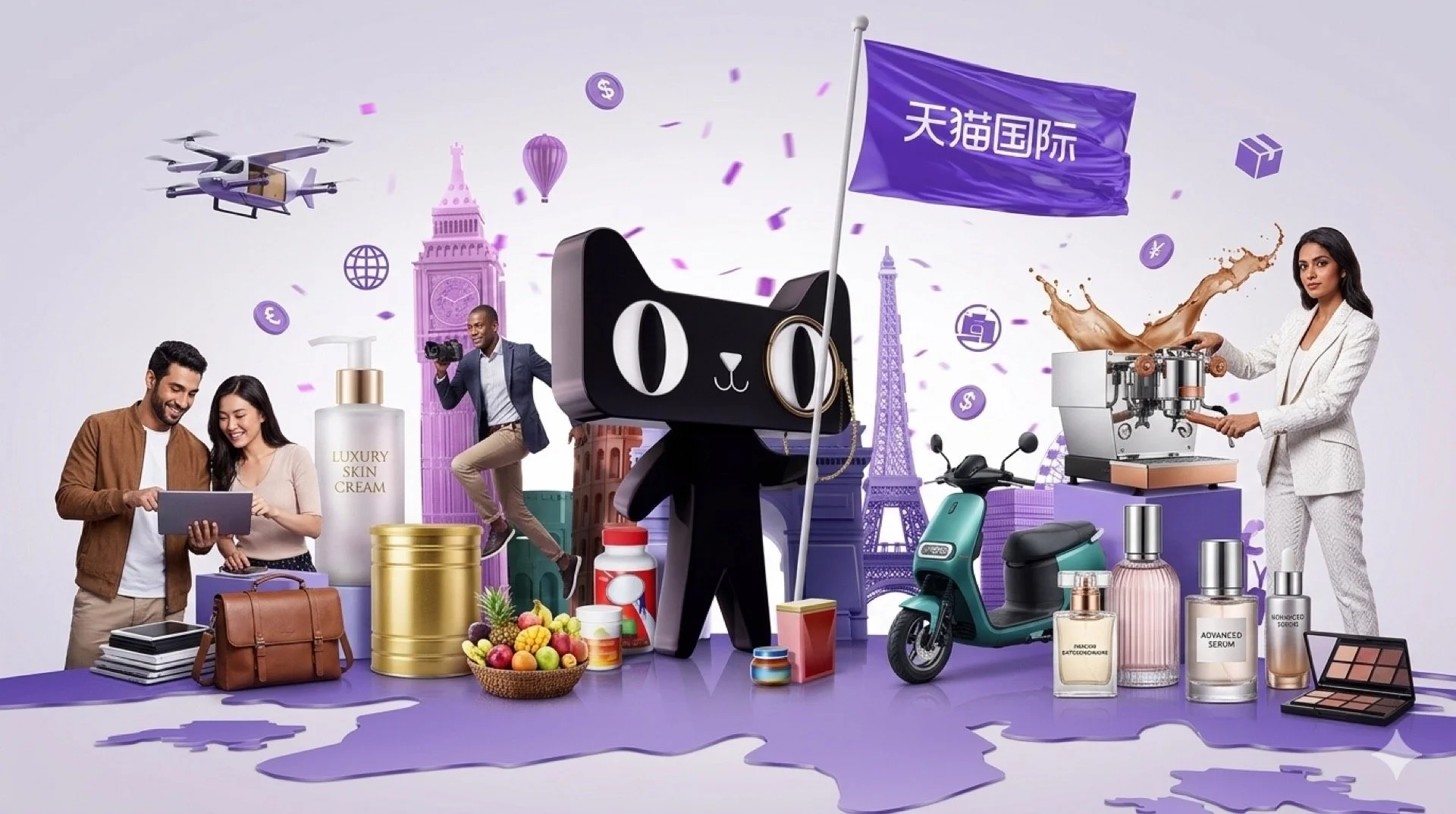
The primary sales channel for imported collagen supplements via CBEC. Successful brands invest heavily in detailed product pages with ingredient breakdowns, peptide molecular weight specifications, clinical study references, and origin storytelling. Participation in 618 (June) and Double 11 (November) sales events is critical for volume, with many brands generating 30-50% of annual revenue during these two periods. Bundle offers (3-month supply, combination sets with hyaluronic acid or vitamin C) drive higher average order values during promotions.
JD Worldwide
JD's warehouse-direct model provides reliable cold chain logistics for temperature-sensitive liquid collagen products. The platform's consumer base skews slightly older and more male compared to Tmall, making it effective for joint health and fitness-positioned collagen products.
Little Red Book (Xiaohongshu)
The most important discovery platform for collagen products. High-performing content includes ingredient comparison posts (fish collagen vs. bovine collagen vs. plant-based), morning routine videos showing collagen consumption, skin transformation photo diaries, and honest reviews comparing Japanese, European, and Australian brands. Seeding with 30-50 beauty and wellness KOCs builds the organic review base that Chinese consumers rely on before purchasing.
Douyin (TikTok) E-Commerce
Livestream commerce is particularly effective for collagen products. Real-time product demonstrations, ingredient education, and limited-time bundle offers create urgency. Successful Douyin strategies combine influencer livestreams with brand-owned streams that focus on educational content (how collagen works, what to look for in quality products).
Market Entry Roadmap
The following phased approach is designed for foreign collagen brands entering China through CBEC, with optional parallel Blue Hat registration for long-term domestic expansion.
Launch Your Collagen Brand in China
Find out exactly how to bring your collagen products to Chinese consumers through cross-border e-commerce.
- CBEC compliance and bonded warehouse logistics
- Tmall Global flagship store setup and management
- KOL and KOC seeding on Little Red Book and Douyin
Frequently Asked Questions
How big is the collagen market in China?
China's collagen market generated $709.4 million in 2024 and is projected to reach $1.42 billion by 2030 at a 12.4% CAGR, according to Grand View Research. The supplement-specific segment was valued at approximately $299 million in 2024. China's growth rate is nearly double the global average, making it one of the fastest-growing collagen markets in the world.
Do I need Blue Hat registration to sell collagen in China?
Not if you sell through cross-border e-commerce (CBEC). Collagen supplements sold via Tmall Global or JD Worldwide are classified as personal goods and are exempt from Blue Hat registration. Blue Hat is required only for products sold through domestic e-commerce or offline retail channels. Most foreign brands enter through CBEC first and pursue Blue Hat registration in parallel for long-term expansion.
What types of collagen products sell best in China?
Collagen drinks (liquid sachets and ready-to-drink formats) are the largest category, led by Japanese brands. Hydrolyzed collagen peptide powders are the fastest-growing segment. Gummies are trending among younger consumers for their convenience and taste. Marine collagen is gaining preference over bovine collagen due to perceived higher bioavailability.
Which platforms are best for selling collagen in China?
Tmall Global is the primary sales channel for imported collagen via CBEC. JD Worldwide offers strong logistics for temperature-sensitive products. Little Red Book (Xiaohongshu) is essential for product discovery and review-based marketing. Douyin drives awareness through livestream commerce and ingredient education content. Most successful collagen brands maintain presence across all four platforms.
What is the CBEC tax rate for collagen supplements?
The combined CBEC tax rate for collagen supplements is approximately 9.1% on the transaction price. This is calculated on the actual sale price to the consumer, which is typically more favorable than general trade import duties (which can range from 10-20% plus 13% VAT calculated on the lower CIF import price). Because these two tax bases are different, the percentage rates cannot be directly compared. CBEC also avoids the need for Chinese-language product labeling at the general trade standard.