
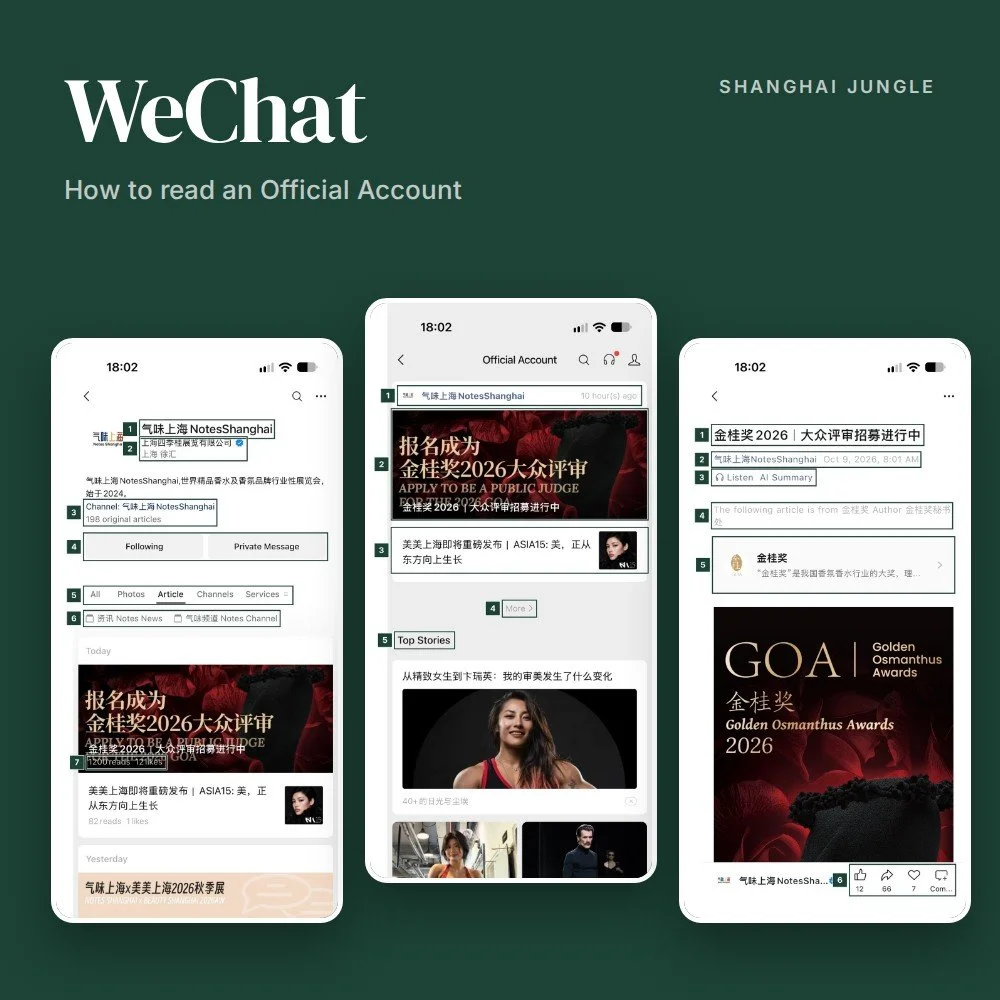
How To Read A WeChat Official Account
WeChat is the most used app in China, and exhibitions, hotels and brands publish their news on WeChat Official Accounts. This screen by screen guide explains the account profile, what followers receive, the parts of an article, read counts, Channels videos and photo posts, for foreign brands planning an account and anyone new to WeChat.
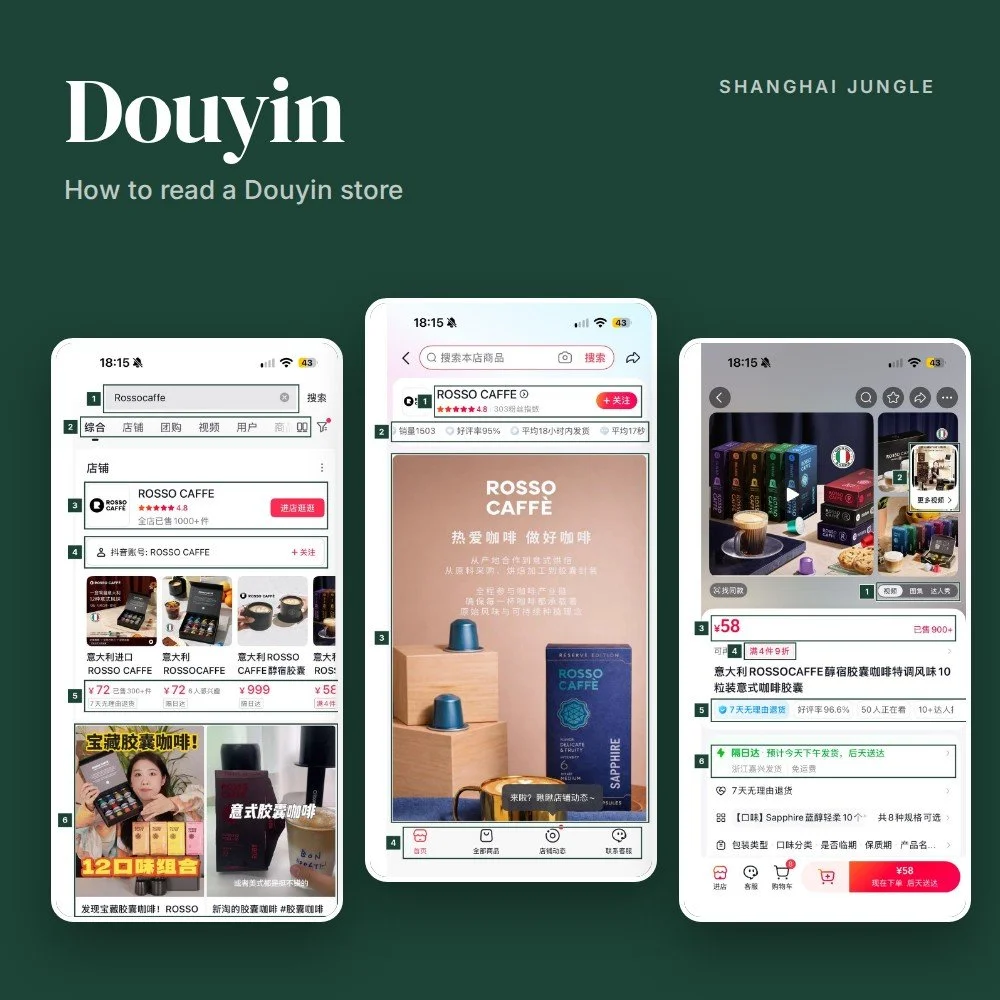
How To Read A Douyin Store
Douyin is a video app and a shopping platform in one. This screen by screen guide follows a foreign brand's Douyin store from search to checkout: search results, the store page with shipping and reply times, the product page, reviews and AI summaries, creator videos with shopping links and customer service, for foreign brands planning to sell on Douyin.
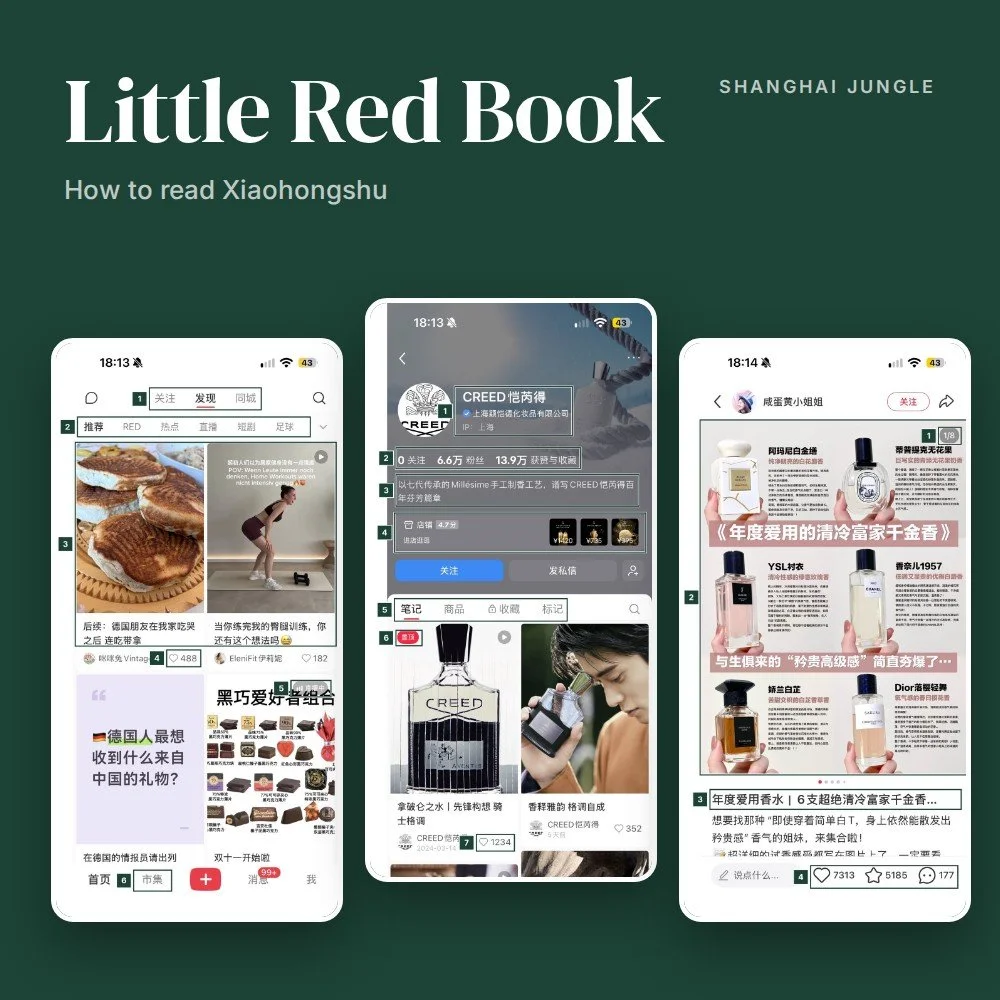
How to Read A Little Red Book Account
Little Red Book (Xiaohongshu, RedNote) is where Chinese shoppers research products before they buy. This screen by screen guide explains the home feed, search suggestions, brand accounts with in-app stores, notes, comments, creator profiles and Pugongying bookings, and why saves matter as much as likes, for foreign brands planning a Little Red Book account.
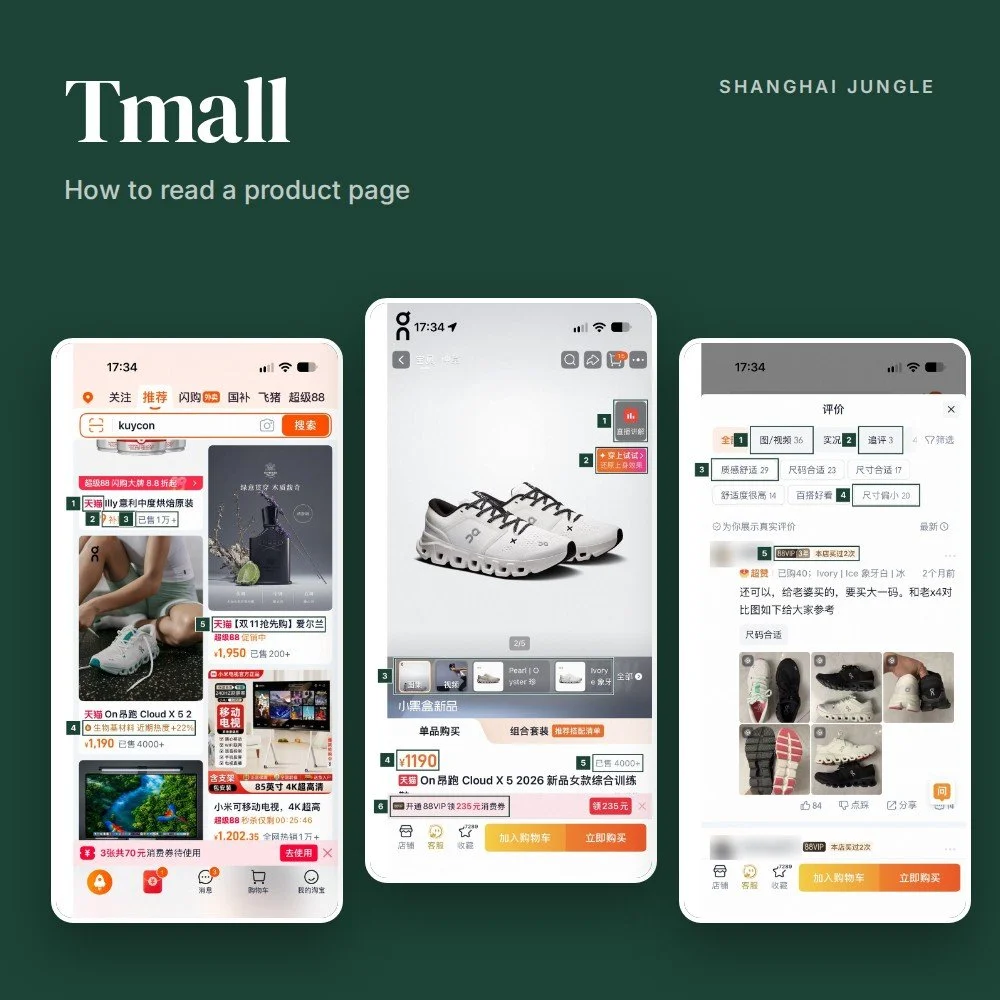
How To Read A Tmall Product Page
A screen by screen guide to the Tmall product page for foreign brands. Annotated screenshots explain search results, price after coupons, the sales counter, 88VIP pricing, trust signals, review tags, product specs, the flagship store page and customer service, and show which parts a brand controls and which are earned from buyers.

Marketing Supplements in China
How do foreign supplement brands market in China without breaking the rules? These seven short videos cover why education drives sales, the content types that convert, the health claims China's Advertising Law prohibits, how Tmall screens listings, and what you can say instead.

Popular Supplement Categories in China
Which supplement categories actually work for foreign brands in China? These eight short videos break down vitamins, fish oil, probiotics, collagen, sports nutrition, and the emerging segments worth watching, covering competition, growth, and how to choose the products you launch with.

How to Sell Imported Supplements in China
Where do foreign supplement brands actually start in China? These six short videos explain the market opportunity, why Blue Hat registration blocks domestic sales, how cross-border e-commerce on Tmall Global works, the purchase limits that rarely matter, and who really buys imported supplements.

How Social Media Drives E-commerce Sales in China in 4 Videos
Where do Chinese consumers actually discover new products? These four short videos explain how Little Red Book (Xiaohongshu), Douyin, and WeChat drive e-commerce sales in China: KOC seeding, the four rules of Xiaohongshu content, and why Douyin builds awareness while WeChat drives repeat purchases.

How Marketing on Tmall Actually Works: 6 Short Videos
Why do brands with big ad budgets still fail on Tmall? These six short videos explain how Tmall marketing actually works: the traffic pool system, why ads alone can hurt your organic ranking, China's review culture, and the 30-second customer service rule.

Why Western E-Commerce Doesn't Work in China: 6 Videos
Why did Amazon leave China with 1% market share after 15 years? Why is Google useless there, and what replaced credit cards? This six-episode video series explains the Great Firewall, mobile payments, platform-based search, and the social apps a billion consumers live inside.

What Is Tmall? China's E-Commerce Giant in 4 Videos
What is Tmall and why does every China conversation start with it? This video series answers in under a minute per episode: Niche categories that outsize entire nations, and how Tmall came to hold over 40% of branded e-commerce.

Tmall Cross-Border vs. Domestic — Certification, Timelines, and Strategy in 9 Short Videos
How do foreign brands decide between cross-border and domestic on Tmall? This video series covers the deciding factors in under 90 seconds per episode — certification requirements, launch timelines, market validation through cross-border sales, and the phased playbook winning brands use to expand into domestic China.

How Western E-Commerce Compares with China’s Ecosystem
China operates behind the Great Firewall as a completely separate digital ecosystem. Google, Facebook, Instagram, and YouTube are blocked. Mobile payments replaced credit cards. Search happens inside Little Red Book (Xiaohongshu), Douyin, and Tmall — not Google. This video guide explains why Western e-commerce strategies fail in China.

China Trademark Registration: Why Foreign Brands Must File First
China operates a first-to-file trademark system, which means whoever registers your brand name with CNIPA owns it. This video guide for foreign brands covers why China is different, the squatter problem, Tmall and Tmall Global requirements, the 8 to 12 month registration timeline, why you must register in your own company name, product classes, Chinese-language marks, and what to do if someone else already owns your trademark.

Tmall Cross-Border vs. Domestic — Explained in 5 Short Videos
Should your brand sell cross-border or domestic on Tmall? This video series breaks down the key differences — from regulatory requirements and logistics to trademark needs and long-term strategy. Watch all five episodes from Shanghai Jungle, a Tmall Partner based in Shanghai.

Working with a Tmall Partner: What Foreign Brands Need to Know
A Tmall Partner (TP) manages your brand's Tmall or Tmall Global store — handling setup, logistics, customer service, and marketing. This video guide covers what TPs do, when you need one, who should own the store, how money flows, seven red flags when choosing a TP, and how to structure a partnership that protects your brand. Includes chapter navigation and full written guide.