Warehouse and Fulfillment Options for China E-Commerce
Warehouse and Fulfillment Options for China E-Commerce
Your fulfillment model defines delivery speed, returns complexity, cash flow, and how quickly you can scale from a small market test to a reliable China operation.
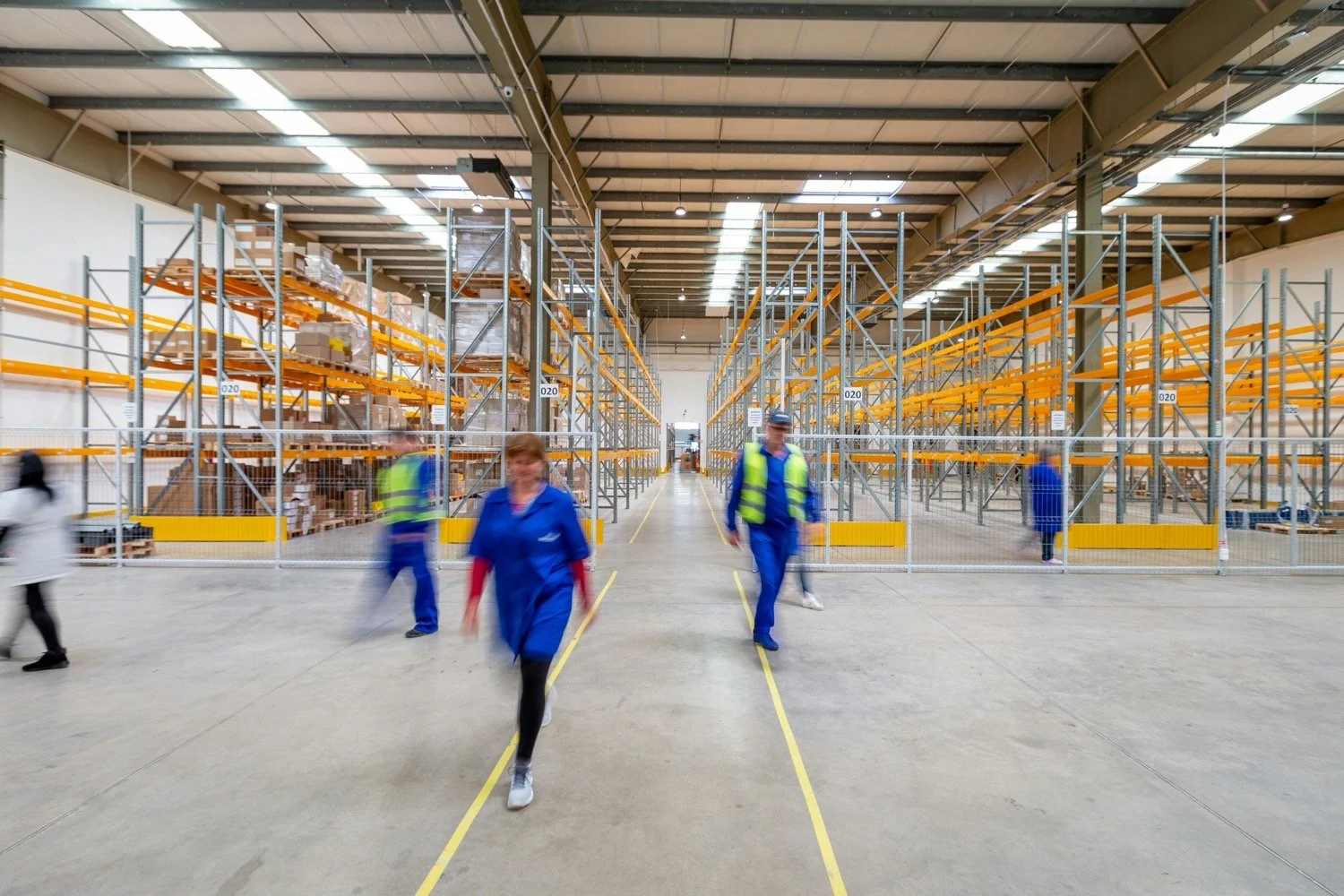
The query "warehouse fulfillment options China ecommerce comparison" is really one decision: do you want low-friction entry, or maximum control? Bonded warehouses (CBEC) are usually the fastest path to a live store, domestic warehousing is what you graduate into once volumes justify it, and direct shipping can work when you stay niche or run limited SKUs. If you want the broader operational context behind this decision, see our China operations services overview.
Baseline
A useful way to sanity-check any fulfillment plan is to start from China customer expectations. Most categories compete on 1–3 day delivery. Bonded warehouses are physically located inside China, so orders dispatch domestically — delivery speed is the same as any local warehouse. The trade-off is cost: bonded facilities are regulated, well-run operations with higher storage and handling fees than a standard domestic warehouse.
The four fulfillment models foreign brands actually use
Most conversations about "China warehousing" mix together legal structures, customs regimes, and shipping methods. A cleaner way to look at it is by the operational model you run day to day. In practice, foreign brands entering China e-commerce tend to land in one of four buckets.
The fourth bucket is the partner model. You can run any of the above through a third-party logistics provider (3PL) that operates the warehouse, WMS integration, packing, domestic couriers, and returns handling. In China, a good 3PL is the difference between predictable daily operations and constant firefighting.
Bonded warehouse fulfillment (CBEC): the default entry model
Bonded warehousing is the standard for Tmall Global and JD Worldwide, and many CBEC programs. Your inventory is physically inside China — sitting in a regulated bonded zone — but legally "outside" the domestic tax system until a customer places an order. Because the goods are already on Chinese soil, orders ship via domestic couriers at domestic speed. There is no international leg once inventory arrives. Customs clearance happens per order, usually with automated declarations tied to the platform and warehouse system. This model sits inside the broader China market entry path most foreign brands follow.
The operational benefits are straightforward: delivery times are genuinely domestic — not "feels domestic," but actually domestic — because inventory is already inside China and ships through the same courier networks as any local warehouse. You can test China demand without setting up a Chinese entity. The trade-offs are tighter rules around category eligibility, product claims, and how the platform expects you to label and report inventory. The other trade-off is cost: bonded warehouses are government-regulated facilities with strict operational standards. They are clean, well-organized, and run at a higher standard than most domestic warehouses — but storage fees and per-order handling fees reflect that quality. Expect to pay more per cubic meter per month and more per pick-and-pack order than you would in a standard Chinese warehouse.
Bonded warehousing also reduces customer anxiety around international parcels. The moment a buyer sees domestic tracking and predictable delivery windows, store ratings, repeat purchase behavior, and ad efficiency usually improve.
Domestic warehouse fulfillment (general trade): control, complexity, scale
Domestic warehousing usually implies you are operating through a Chinese entity (typically a WFOE) and importing under general trade. This gives you maximum flexibility: full domestic platform access (see our Tmall Global vs domestic Tmall comparison), broader product line freedom, and tighter delivery SLAs. It also means you are running a full import-and-distribution operation inside China. This typically becomes relevant once your e-commerce layer is stable, as laid out on our China e-commerce services page.
In practice, you will almost never run your own warehouse in China — it simply does not make economic sense for most foreign brands. Instead, you work with a domestic 3PL partner who operates the facility on your behalf. This is where the flexibility advantage becomes clear. Unlike bonded warehousing, where you are limited to around nine free-trade zones across the country, domestic warehousing opens up thousands of potential partners and locations, each with different cost structures, specializations, and geographic coverage. You can choose a partner optimized for your category, your volume tier, and the regions where your customers are concentrated.
Your warehouse partner handles the day-to-day operations: receiving inbound stock, packing orders, repacking where needed, and handing parcels over to the last-mile logistics provider. What you still need is someone on your team — or your TP's team — to manage the system side: triggering shipments, syncing inventory levels, and staying in regular communication with the warehouse partner. The warehouse does the physical work; your team does the coordination.
| Factor | Bonded warehouse (CBEC) | Domestic warehouse (general trade) |
|---|---|---|
| Legal setup | No Chinese entity required | Usually requires WFOE or a local distributor structure |
| Delivery experience | Domestic speed — inventory is physically in China | Domestic speed — same courier networks |
| SKU flexibility | Restricted by CBEC rules and category constraints | Broad, subject to domestic compliance |
| Operational burden | Moderate; platform and bonded warehouse handle many steps | High; you run the full import, tax, and inventory stack |
| Warehousing cost | Higher — regulated facilities with strict standards, clean operations, premium fees | Lower per-unit storage, but total operational cost is higher due to entity and compliance overhead |
Direct shipping from overseas: when it works, and why it often breaks
Direct shipping can be viable when you sell high-value products with low return rates, limited SKUs, and a customer base willing to wait. It is operationally appealing because you can centralize inventory in your existing warehouse. The downside is that delivery times become less predictable and customer service load increases as you handle tracking questions and missed delivery windows.
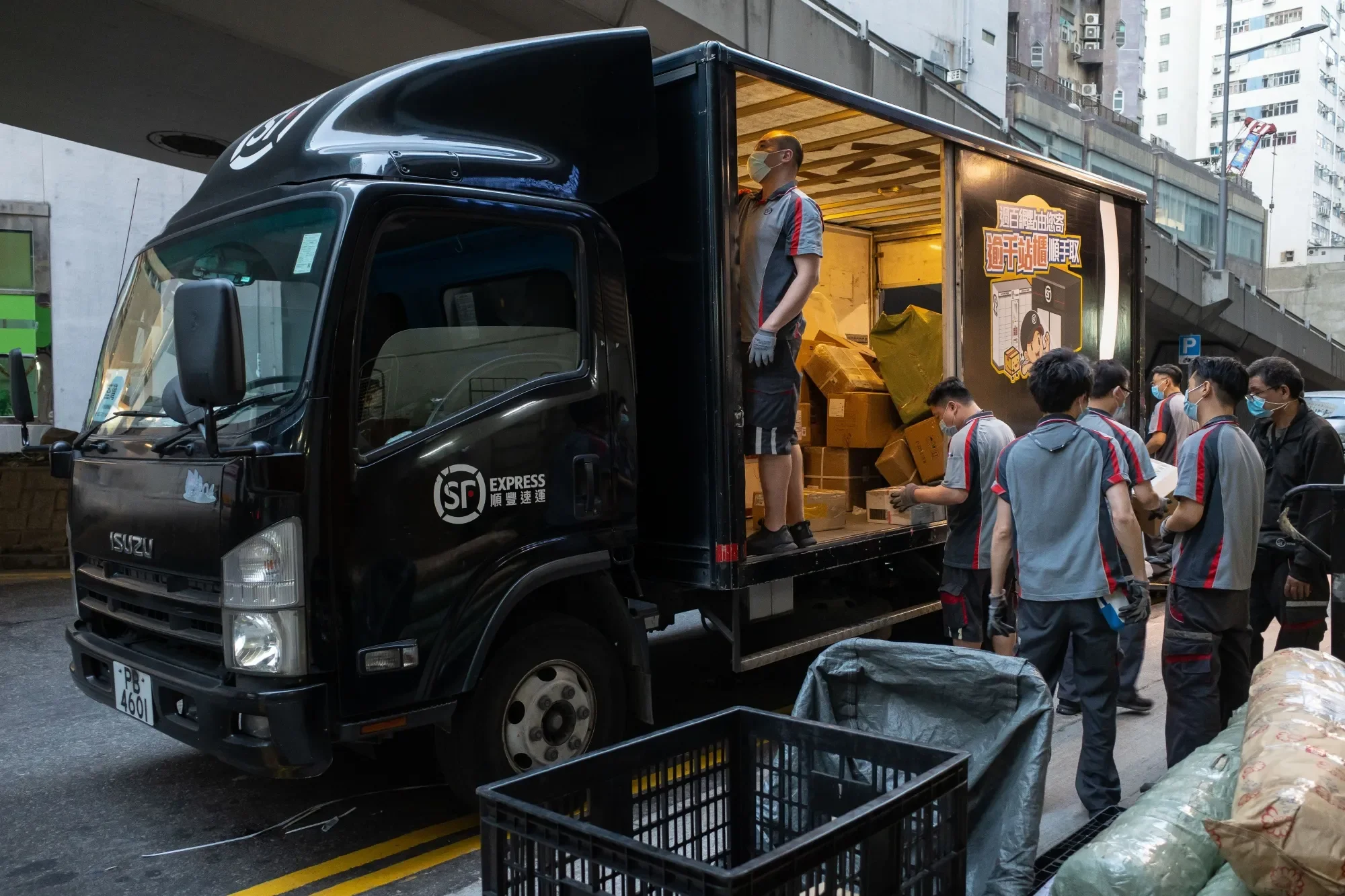
The typical failure mode is conversion. In China e-commerce — whether on Tmall or Douyin — platforms and consumers both reward reliability and speed. If competitors deliver in a couple of days and you deliver in two weeks, your store struggles to build momentum even when the product is strong.
Realistically, any brand serious about selling online in China today needs inventory inside the country — either in a bonded warehouse or a domestic warehouse. Shipping from abroad is no longer a viable primary fulfillment strategy. Chinese consumers have too many alternatives. If your store cannot deliver within the expected window, buyers simply move to the next brand that can. The competitive bar has been set by platforms and local sellers who ship same-day or next-day, and international lead times cannot close that gap.
Cost, speed, and cash flow: the trade-offs most brands underestimate
Warehousing decisions often get reduced to a per-order fulfillment fee. The bigger levers are cash conversion cycle, dead stock risk, and how quickly you can respond to campaign spikes. A bonded model reduces upfront complexity but forces you into forecasting earlier than direct shipping. A domestic model increases control while increasing working capital requirements.
A decision framework you can use in 15 minutes
The best fulfillment model is the one that matches your stage. Brands often copy the structure of a mature competitor and end up carrying costs they cannot support. Use the table below as a starting point, then validate it against your category and platform requirements. Your Tmall Partner (TP) can help you assess which model fits your launch plan.
| Your current reality | Most practical default | What to validate first |
|---|---|---|
| Testing demand, limited budget, want a fast launch | Bonded warehouse (CBEC) | Category eligibility, labeling/claims rules, inbound shipping plan |
| Stable demand, need broader SKU freedom, want full control | Domestic warehouse (general trade) | Entity setup timeline, import compliance, working capital needs |
| Niche, high AOV, low order frequency, can tolerate slow delivery | Direct shipping | Conversion impact, customer service load, delivery reliability |
| Any model, but you want to reduce operational load | 3PL-managed fulfillment | Platform integrations, returns SOP, peak season capacity |
Want to sanity-check your fulfillment plan before you commit?
If you share your product category, expected monthly volume, and target platforms, we can help you map a practical path from a bonded test to scalable China-side operations.
- A clear entry model: bonded vs domestic vs direct shipping
- A realistic launch timeline tied to inbound shipping and receiving
- A plan for returns, customer service, and peak-season fulfillment
Returns and after-sales: the hidden variable in your fulfillment model
Return rates in China are highly category-dependent. Fashion and apparel brands routinely see return rates around 30%, while electronics and appliances can sit below 10%. Before you commit to a fulfillment model, you need to understand how returns will actually work inside it — because the differences between cross-border and domestic warehousing are significant.
Cross-border (bonded) warehouses generally do not accept customer returns back into bonded inventory. Domestic warehouses, on the other hand, operate under China's standard consumer protection rules, which include "no-reason" returns within seven days. From a brand perspective, not accepting returns might sound like it protects margins — but in practice it costs you customers. Chinese consumers are used to easy returns. If your store cannot offer the same return flexibility as a domestic competitor, many buyers will simply choose the brand that does. The option to return is not a nice-to-have; it is part of what makes a store trustworthy on platforms like Tmall and JD.
The operational gap goes deeper than policy. With a domestic warehouse, you have full access to returned products. Your team or your 3PL can inspect each item, decide whether it can be resold as-is, repacked for resale, sold at a discount, or written off. You control the process end to end. In a cross-border bonded warehouse, you have very little control over returned goods. In most cases, the warehouse simply informs you that the products must either be destroyed or shipped back to you — the original sender — at your cost. Both options are expensive: destruction means a total loss, and international return shipping eats into whatever margin remained on the original sale. This is a significant and often underestimated cost that many brands only discover after they are already operating inside a bonded zone.
Common questions about warehousing in China
How fast can a bonded warehouse deliver in China?
Do I need a WFOE to use a warehouse in China?
When should a brand switch from bonded to domestic warehousing?
Can I run multiple fulfillment models at the same time?
What's the biggest operational mistake brands make with 3PLs?