
Do I Need a Chinese Business License to Sell on Tmall Global?
Do I Need a Chinese Business License to Sell on Tmall Global?
Short answer: no. Tmall Global exists specifically so foreign brands can sell into China without a Chinese entity. Here's what you actually need — and where the real requirements hide.

It's the single most common question we hear from European and North American brands considering China: "Do we need to set up a Chinese company first?" The answer shapes everything — timelines, budgets, legal structures, and whether China market entry feels like a six-week project or a twelve-month ordeal.
The good news is straightforward. Tmall Global — China's largest cross-border e-commerce platform — was built specifically for foreign brands that don't have a Chinese entity. You do not need a Chinese business license, a Chinese bank account, or Chinese product registrations to sell on it. That's the entire point of the platform.
But "no Chinese business license" doesn't mean "no requirements." There's a specific set of documents you do need, a partner structure that effectively handles the Chinese side on your behalf, and a few critical steps — especially around trademarks — that you absolutely cannot skip. This guide covers all of it.
The Short Answer
No, you do not need a Chinese business license to sell on Tmall Global.
Tmall Global is Alibaba's dedicated cross-border e-commerce (CBEC) platform. It's designed from the ground up for companies registered outside of mainland China. Your products ship from overseas or from bonded warehouses inside China — they never enter China's general trade import system, which is what would require a Chinese entity and domestic product registrations.
This is the fundamental distinction that makes China market entry viable for foreign brands without years of preparation and hundreds of thousands of dollars in setup costs. Through Tmall Global's CBEC model, you can be selling to Chinese consumers in as little as four to eight weeks from the start of your application.
Why No Chinese License Is Needed: How CBEC Works
To understand why Tmall Global doesn't require a Chinese business license, it helps to understand the two main routes for getting products into China.
Route 1: General trade import (requires Chinese entity)
This is the traditional path. A Chinese company — either your own subsidiary (WFOE) or a local importer — brings products into China through standard customs channels. The products must be registered with Chinese authorities (NMPA for cosmetics, SAMR for food, CCC for electronics), labeled in Chinese according to domestic standards, and stored in domestic warehouses. The importing company needs a Chinese business license, a Chinese bank account, and import/export qualifications.
Route 2: Cross-border e-commerce (no Chinese entity needed)
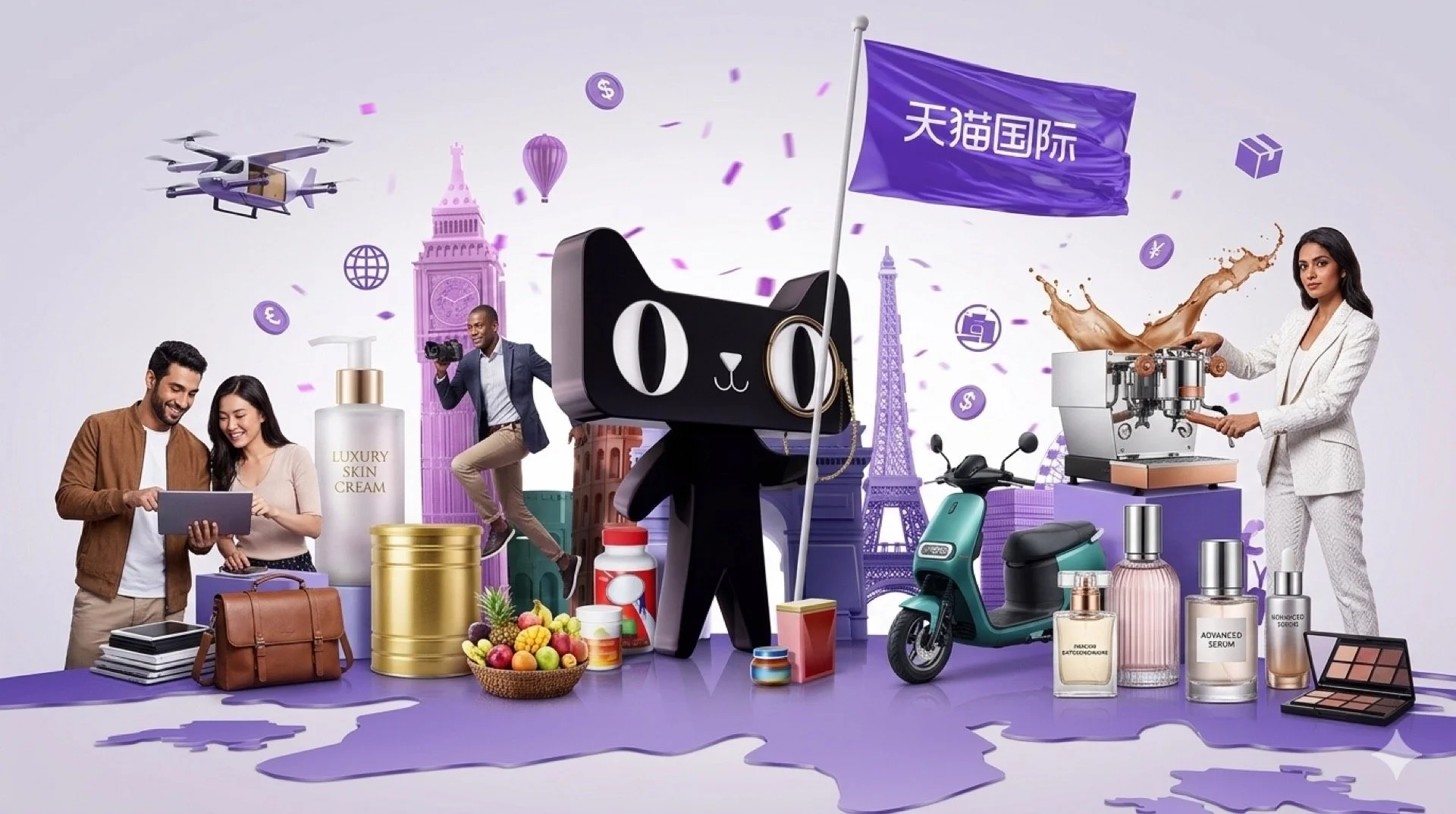
This is the Tmall Global path. Products are sold directly to individual Chinese consumers through a regulated e-commerce channel. They ship from overseas directly to the buyer, or they're pre-positioned in bonded warehouses inside China's free trade zones. Crucially, under CBEC regulations, these products are classified as personal imports — meaning the individual consumer is technically the importer, not your company. This is what eliminates the need for a Chinese business license.
CBEC products benefit from simplified customs clearance, reduced duties (typically a combined tax rate of about 9.1% for most consumer goods versus 20–50%+ under general trade), and exemption from domestic product registration requirements. For cosmetics, this means no NMPA filing. For health supplements, no Blue Hat certification. For electronics, no CCC mark — in most cases.
What You Actually Need Instead
While you don't need a Chinese business license, Tmall Global does have its own set of requirements. These are designed to verify that you're a legitimate business selling authentic products — not to create barriers comparable to domestic market entry.
1. Overseas business registration
You need a registered corporate entity outside of mainland China. This can be a company registered in any country — the US, UK, Germany, France, Australia, etc. Sole proprietorships and individuals generally don't qualify. Tmall Global targets companies that have been operating for at least two years, though this isn't always strictly enforced for strong brands.
2. Brand trademark registration
You need a registered trademark — either in your home country or (preferably) in China. If you're the brand owner, you provide the trademark certificate. If you're an authorized distributor, you need a brand authorization letter from the trademark holder. This is non-negotiable for flagship stores.
3. Product certifications from your home country
While Chinese product registrations aren't required, you do need to demonstrate that your products meet safety and quality standards in your home market. For US brands, this might be FDA registration for cosmetics or supplements. For European brands, CE marking for electronics or EU cosmetics regulation compliance. For food products, relevant food safety certifications.
4. Corporate bank account
You need a corporate bank account that can receive international payments through Alipay's cross-border settlement system. This is your overseas bank account — not a Chinese one. Funds are transferred directly from Alipay to your international account, typically in USD or your local currency.
5. Product documentation
Ingredient lists, product specifications, certificates of origin, and product images. For cosmetics and health supplements, ingredient lists need to be provided in detail. All documentation must be translated into Chinese for the application process.
6. A contact person in China
Tmall Global requires that you have a local contact person in China. In practice, this is almost always your Tmall Partner (TP) agency, which handles the Chinese-side operations on your behalf.
The TP's Chinese License: Why Your Partner Has One So You Don't Need One
Here's where it gets nuanced. While you don't need a Chinese business license, your Tmall Partner (TP) agency does — and this is by design.
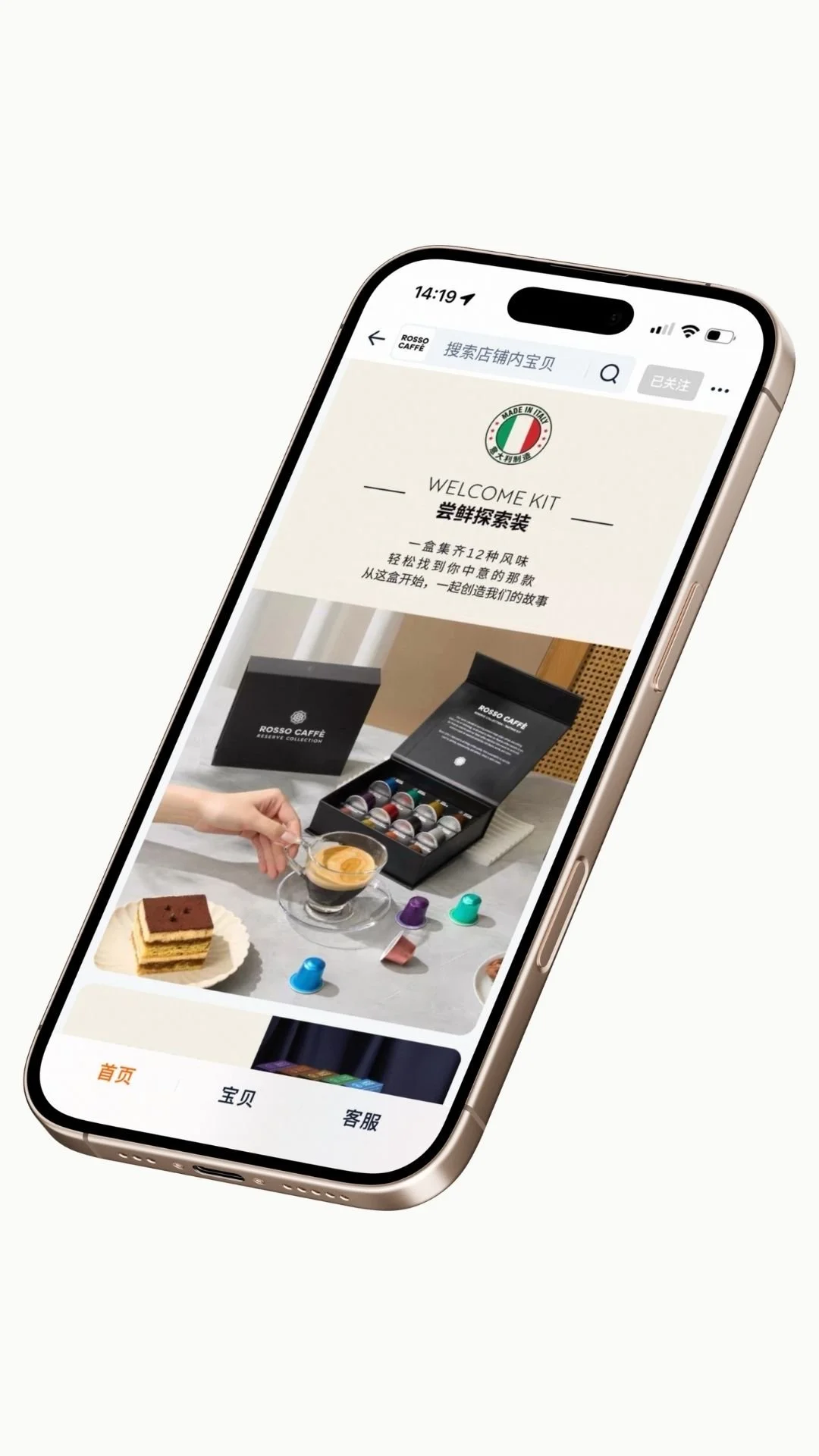
Under Chinese regulations, even in CBEC, there must be a domestic entity responsible for product quality compliance within China. This is the role your TP fills. The TP agency is a Chinese company — registered in China, with a Chinese business license, and certified by Tmall/Alibaba as an authorized partner. They act as your operational arm inside the country.
What the TP's Chinese license covers for you
- Product quality responsibility: The TP serves as the domestic guarantor of product quality, satisfying regulatory requirements without you needing your own entity
- Customer service: Mandarin-language customer service operated from within China, meeting Tmall's response time requirements
- Platform relationship: Direct communication with Tmall's category managers and technical support, which requires a Chinese entity
- Logistics coordination: Managing bonded warehouse operations, customs clearance, and domestic delivery — all of which require Chinese business qualifications
- Advertising operations: Running campaigns on Zhitongche, Zuanshi, and other Alibaba advertising tools that require Chinese entity verification
In practical terms, the TP structure means that a Chinese business license is needed for your Tmall Global operation — it's just not yours. It belongs to your partner, and the cost of their license, compliance, and operational infrastructure is built into the TP agency fees you pay.
Tmall Global vs. Domestic Tmall: Requirements Compared
The confusion about Chinese business licenses often stems from mixing up Tmall Global and domestic Tmall. They're separate platforms with fundamentally different requirements.
| Requirement | Tmall Global (CBEC) | Domestic Tmall |
|---|---|---|
| Chinese business license | Not required | Required (WFOE or JV) |
| Chinese entity setup cost | $0 | $5,000–$15,000+ |
| Chinese bank account | Not required | Required |
| Chinese product registration | Not required | Required (NMPA, CCC, etc.) |
| Product certification cost | $0 (use home-country certs) | $10,000–$50,000+ |
| Trademark | Home-country or China registration | China-registered trademark required |
| Warehousing | Overseas or bonded warehouse | Domestic warehouse required |
| Import duties | CBEC preferential rate (~9.1%) | Full general trade rates (20–50%+) |
| Time to launch | 4–8 weeks | 3–12 months |
For most foreign brands making their first move into China, Tmall Global is the logical starting point. It offers a dramatically lower barrier to entry, faster time to market, and lower risk. Domestic Tmall becomes relevant once a brand has validated demand through CBEC and is ready to invest in deeper market integration — typically after 1–2 years of successful cross-border sales.
Trademark Registration: The One Requirement You Cannot Skip
Of all the requirements for Tmall Global, trademark registration is the one that catches foreign brands off guard — and the one with the most serious consequences if you get it wrong.
China uses a first-to-file trademark system. This means whoever files the trademark first owns it, regardless of who created the brand, regardless of your trademark registrations in other countries, and regardless of how long you've been using the brand name. Your US, EU, or UK trademark offers zero protection in China unless you've also filed in China.
What happens if you don't register first
Trademark squatting is widespread in China. Individuals and companies monitor foreign brands entering the Chinese market and preemptively register their trademarks. If a squatter files your trademark before you do, they legally own your brand in China. You'll face one of three outcomes: pay the squatter to transfer the trademark (typically $10,000–$50,000), fight the registration through legal proceedings ($20,000–$80,000, taking 12–24 months with no guaranteed outcome), or rebrand for the Chinese market entirely.
What to register and when
- File as early as possible — ideally 6–12 months before you plan to launch on Tmall Global, because Chinese trademark registration takes approximately 9–12 months to complete
- Register in relevant Nice classes — not just your primary product category, but adjacent classes that could be exploited by squatters
- Register in both English and Chinese — your Roman-character brand name and a Chinese-character version (either a phonetic transliteration, a meaning-based translation, or a combination)
- File under your company name — never your agency's name, never your distributor's name, always your own corporate entity
Common Misconceptions Cleared Up
"I need a WFOE (Wholly Foreign-Owned Enterprise) to sell in China"
Not through CBEC. A WFOE is required for general trade import and domestic business operations, but Tmall Global's cross-border model specifically eliminates this need. Setting up a WFOE costs $5,000–$15,000 in registration fees alone, takes 2–4 months, and creates ongoing compliance obligations including annual audits, tax filings, and statutory minimum capital requirements. Save this for when you've proven demand through CBEC.
"My products need to be registered with Chinese authorities"
Not for CBEC. Products sold through Tmall Global's cross-border channel don't need NMPA registration (cosmetics), Blue Hat certification (health supplements), CCC marking (electronics), or any other domestic Chinese product approval. You use your home-country certifications. This alone saves $10,000–$50,000+ and 6–18 months of regulatory timeline per product category.
"I need a Chinese bank account to receive payments"
No. Alipay's cross-border settlement system transfers funds directly to your international bank account. You receive payment in your local currency (or USD, EUR, GBP — your choice). No Chinese banking relationship is required.
"CBEC is only for small test volumes"
This was true in CBEC's early years but hasn't been accurate for some time. There are no per-seller volume restrictions on Tmall Global. Individual consumer transactions are limited to ¥5,000 per order and ¥26,000 annually per person, but there's no cap on how many customers you can serve or your total annual GMV. Brands generating $5–$10M+ annually through Tmall Global CBEC are common.
"I can just ship directly from my warehouse abroad"
You can — this is the direct mail (直邮) model. But it's not ideal for most brands. Direct shipping to China typically takes 7–14 days, which Chinese consumers find unacceptable compared to the 1–3 day delivery they expect. Most successful Tmall Global sellers use bonded warehouses in China's free trade zones, where inventory is pre-positioned and ships domestically. This offers delivery times of 2–5 days while maintaining the CBEC tax and regulatory benefits.

Your Document Checklist: Everything You Need to Apply
Here's the complete list of documents you'll need for your Tmall Global application. Your TP agency will guide you through preparation, but gathering these in advance accelerates the process significantly.
Corporate documents
- Business registration certificate — your company's certificate of incorporation or equivalent from your home country
- Company identification documents — director/shareholder identification as required by Tmall
- Corporate bank account details — for Alipay cross-border settlement
Brand documents
- Trademark registration certificate — home-country and/or China registration
- Brand authorization letter — if you're a distributor rather than the brand owner, showing authorization to sell on Tmall Global in China
- Brand story and product portfolio — Tmall reviews brand quality and market positioning as part of the application
Product documents
- Product certifications — FDA, CE, GMP, or equivalent from your home market
- Ingredient/material lists — detailed product composition, especially for cosmetics and supplements
- Certificates of origin — proving where your products are manufactured
- Product images and descriptions — high-resolution product photography and detailed specifications, translated into Chinese
Operational setup
- TP agency agreement — your signed contract with a certified Tmall Partner who will manage operations
- Logistics plan — bonded warehouse selection and shipping arrangements (typically coordinated by your TP)
Frequently Asked Questions
Do I need a Chinese business license to sell on Tmall Global?
What documents do I need to open a Tmall Global store?
What is the difference between Tmall Global and domestic Tmall?
Do I need a Tmall Partner (TP) agency to sell on Tmall Global?
Can I sell on Tmall Global without a trademark?
Skip the Chinese Entity. Start Selling.
We help foreign brands launch on Tmall Global in 4–8 weeks — no Chinese business license, no product registration, no guesswork. As a certified Tmall Partner, we handle the Chinese side so you can focus on your brand.
- Complete Tmall Global application and store setup
- Trademark filing guidance and IP protection
- Bonded warehouse logistics and customs clearance

"The beauty of Tmall Global is that it was designed for exactly this situation — foreign brands that want to test China without committing to a Chinese entity. Use it."— Shanghai Jungle