
China Market Entry Strategy: A Step-by-Step Framework for Foreign Brands
China Market Entry Strategy: A Step-by-Step Framework for Foreign Brands
A proven framework that takes you from initial research to live sales in China — covering legal setup, platform selection, content localization, launch execution, and long-term optimization.

Why Most Brands Fail Without a Framework
A successful china market entry strategy requires more than good products and ambition. China is the world's largest e-commerce market — projected to reach $2.93 trillion in annual online retail sales in 2025, with over 900 million digital consumers and an ecosystem that operates nothing like the West. Yet the failure rate for foreign brands entering China remains staggeringly high.
The problem is rarely the product. It's the process. Brands that fail typically share one thing in common: they approached China as an incremental expansion rather than a distinct strategic initiative requiring its own framework, budget, and timeline.
The brands that succeed treat China market entry as a structured project with clear phases, defined milestones, and realistic expectations. They understand that "we'll figure it out as we go" is the most expensive strategy of all.
This guide provides the step-by-step framework we've developed after years of launching foreign brands in China. It covers six distinct phases — from initial research through post-launch optimization — with specific actions, timelines, and budget guidance at each stage.
The Six Phases of China Market Entry
Successful China market entry follows a logical sequence. Skipping phases or doing them out of order is one of the most common causes of failure. Here's the high-level framework before we dive into each phase:
| Phase | Focus | Timeline | Key Outcome |
|---|---|---|---|
| 1. Research | Market validation & competitor analysis | Months 1–2 | Go / no-go decision with data |
| 2. Legal | Trademark, entity, regulatory | Months 1–3 (parallel) | IP protected, legal structure defined |
| 3. Platform | Channel selection & store setup | Months 3–5 | Store live on chosen platforms |
| 4. Content | Localization & brand assets | Months 3–6 | China-ready content across channels |
| 5. Launch | Go-to-market & initial marketing | Months 5–7 | First sales, initial traction data |
| 6. Optimize | Scale, iterate, expand | Months 7–12+ | Sustainable growth & profitability path |
Typical First-Year Investment Breakdown
Phase 1 — Market Research & Readiness Assessment
Timeline: Months 1–2 | Budget: $5,000–$20,000
This is where most brands either set themselves up for success or begin the slow march toward failure. The goal of Phase 1 is to answer one question honestly: Should we enter China, and if so, how?

Competitive Landscape Analysis
Before investing in China, you need to understand who's already there. This isn't about finding direct competitors — it's about understanding the entire competitive ecosystem your brand will enter.
- Platform search analysis — Search your category keywords on Tmall, JD, and Douyin. How many brands appear? What price ranges dominate? Are foreign brands present?
- Top seller review — Identify the top 10 sellers in your category. Analyze their pricing, reviews, content quality, and marketing approach.
- Gap identification — Where is the market underserved? Is there a positioning angle (premium quality, unique ingredients, heritage storytelling) that no one owns?
- Price sensitivity mapping — Chinese consumers have very specific expectations about pricing by category. Your home-market pricing likely won't translate directly.
Consumer Demand Validation
Search volume and social listening data tell you whether Chinese consumers are actively looking for what you sell — or whether you'd need to create demand from scratch.
- Baidu Index and Tmall search volume for your product category and brand name
- Little Red Book (Xiaohongshu) mentions — Are Chinese consumers already discussing your brand or product type?
- Douyin hashtag volume — Is there organic content creation around your category?
- Cross-border purchase patterns — Are daigou (personal shoppers) already buying your products for Chinese customers?
Internal Readiness Check
China requires sustained commitment. Brands that treat it as a side project consistently underperform.
- Budget — Can you commit to 12–18 months of investment before expecting profitability?
- Internal champion — Is there someone in your organization with decision-making authority who owns the China initiative?
- Product readiness — Can your supply chain support China-specific requirements (labeling, formulation adjustments, inventory allocation)?
- Expectations alignment — Does leadership understand that year one is about building infrastructure, not maximizing revenue?
Phase 2 — Legal Foundation & IP Protection
Timeline: Start in Month 1 (runs parallel) | Budget: $5,000–$25,000
Legal setup is the phase most brands want to rush through or skip entirely. This is a mistake. The legal decisions you make now will determine your operating costs, tax exposure, and level of brand protection for years to come.
Trademark Registration
This is non-negotiable. File your China trademark before you announce any plans to enter the market. China operates on a first-to-file system — whoever registers the trademark first owns it, regardless of who created the brand.
- File in all relevant Nice classes — Don't just file in your primary category. Trademark squatters often register in adjacent classes.
- Register a Chinese brand name — Chinese consumers will give your brand a Chinese name whether you choose one or not. Better to control the narrative.
- Timeline reality — Registration takes 9–12 months. File early so you have protection by launch time.
- Cost — Approximately $2,000–$5,000 for multiple classes through a specialized China IP firm.
Entity Structure Decision
Your entity structure determines how you sell in China. There are three main approaches:
| Approach | Entity Required? | Setup Time | Best For |
|---|---|---|---|
| Cross-border (CBEC) | No Chinese entity | 2–3 months | Market validation, testing demand |
| WFOE (domestic) | Yes — Wholly Foreign-Owned Enterprise | 4–6 months | Full control, domestic platforms |
| Joint Venture | Yes — with Chinese partner | 4–8 months | Regulated industries, local expertise |
Regulatory & Compliance
Different product categories face different regulatory requirements. Cosmetics, food, health supplements, and medical devices each have specific registration or filing requirements that can add months to your timeline if not planned for early.
- NMPA registration — Required for cosmetics and health products sold domestically (not always required for CBEC)
- CIQ labeling — Chinese labeling requirements for imported goods
- Ingredient restrictions — Some ingredients permitted in your home market may be restricted in China
- Product testing & certification — Budget 2–6 months depending on your category
Phase 3 — Platform Selection & Store Setup
Timeline: Months 3–5 | Budget: $8,000–$60,000 (deposits + setup)
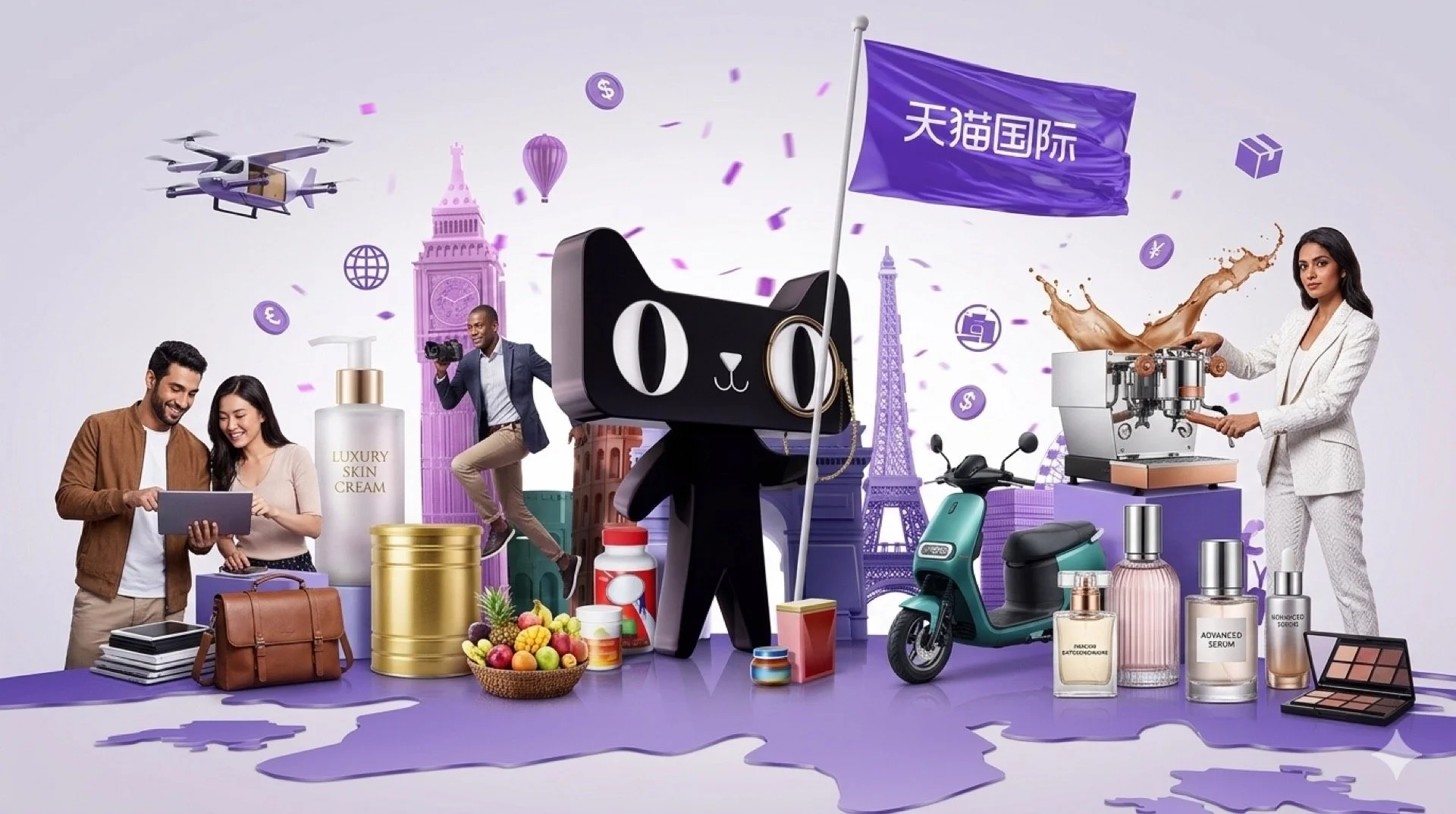
Platform selection is one of the most consequential decisions in your China strategy. Each platform serves different audiences, favors different content formats, and requires different operational capabilities.
The Major Platform Landscape
| Platform | Strength | Audience | Deposit (Cross-Border) |
|---|---|---|---|
| Tmall Global | Brand building, search-driven sales | Broad, quality-conscious | $8,000–$50,000 |
| JD Worldwide | Logistics, electronics, premium goods | Male-skewing, tech & premium | $8,000–$30,000 |
| Douyin | Discovery, impulse, livestream | Young, trend-driven | Varies |
| Xiaohongshu (Little Red Book) | Brand awareness, beauty & lifestyle | Female, 18–35, aspirational | Varies |
| Pinduoduo / Temu | Volume, price-sensitive | Value-seekers, lower tier cities | Variable |
How to Choose Your Launch Platform
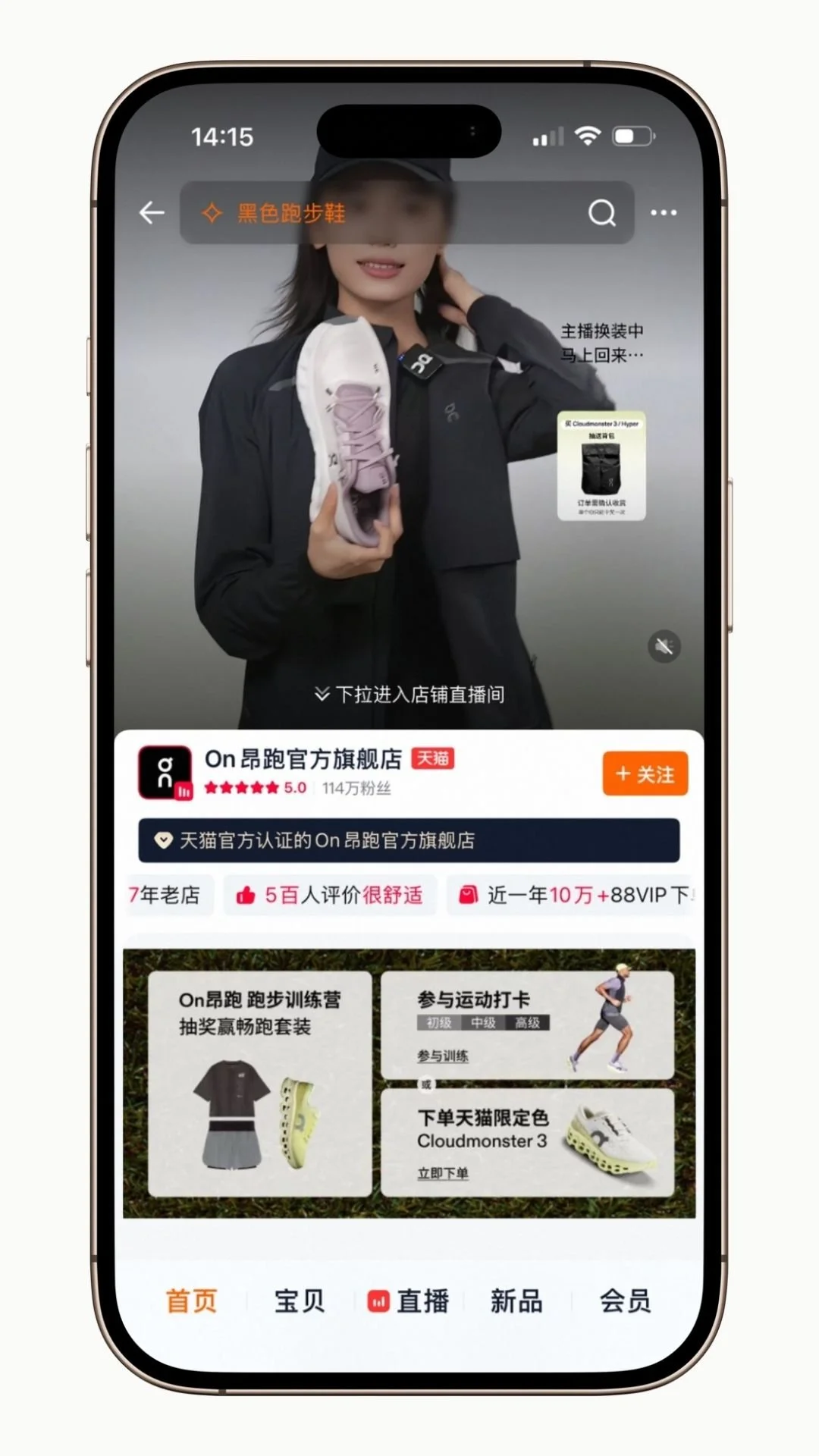
Don't try to be everywhere at once. Choose one primary platform for launch and expand once you've established traction.
- Tmall Global is the default starting point for most foreign brands because it combines search-driven discovery with strong brand-building tools and is the most recognized cross-border platform among Chinese consumers.
- JD Worldwide is ideal if your products lean toward electronics, appliances, premium food & beverage, or health supplements where JD's reputation for authenticity matters.
- Douyin is increasingly a launch platform in its own right — particularly for brands with strong visual appeal, compelling founder stories, or products that demonstrate well on video.
Choosing Your Operating Partner
Unless you have a team on the ground in China, you'll need a partner to operate your store. The two main models are Tmall Partners (TPs) and distributors — each with fundamentally different implications for your brand.
- TP model — The partner operates your store on your behalf. You retain brand control, own the customer data, and control pricing. You pay agency fees plus a commission on sales.
- Distributor model — The partner buys your products and resells them. Simpler operationally, but you lose control over pricing, positioning, and customer relationships.
Phase 4 — Content Localization & Brand Building
Timeline: Months 3–6 (overlaps with Phase 3) | Budget: $5,000–$20,000
Content is where most foreign brands dramatically underinvest. In China's digital ecosystem, content isn't marketing support — it is the marketing. Every touchpoint with a Chinese consumer is content-driven, from your store page to social media to KOL collaborations.
Store Content
Your Tmall or JD store page isn't a product catalog — it's a brand experience. Chinese e-commerce store pages are significantly more content-rich than Western equivalents.
- Product detail pages (PDPs) — Expect 8–15 scrollable screens per product with brand story, ingredient breakdowns, usage instructions, certifications, and social proof
- Hero banners — Rotating homepage banners for campaigns, promotions, and new arrivals
- Video content — Product demos, brand story videos, and short-form clips for each SKU
- Store design — Custom storefront that reflects your brand identity while following platform UX conventions
Social Content
China's social platforms each require distinct content strategies:
- Xiaohongshu (Little Red Book) — Authentic, educational, lifestyle-oriented posts. Product reviews, how-to guides, "haul" content.
- Douyin — Fast-paced, visually compelling short videos. Product demonstrations, before/after reveals, trend participation.
- WeChat — Long-form articles for brand storytelling, CRM, and community building.
- Weibo — Brand announcements, campaign amplification, celebrity/KOL content partnerships.
Localization vs. Translation
This distinction is critical. Translation means converting your English content into Chinese. Localization means rebuilding your brand narrative for Chinese consumers — different aspirations, different reference points, different visual preferences.
Phase 5 — Launch Execution & Go-to-Market
Timeline: Months 5–7 | Budget: $20,000–$60,000 (marketing spend)
Launch is where preparation meets execution. A well-planned launch creates momentum that compounds. A poorly timed or underfunded launch wastes months of preparation.
Timing Your Launch
China's retail calendar is punctuated by massive shopping festivals that can accelerate — or overwhelm — a new brand:
- 6.18 (June 18) — JD's anniversary sale, now cross-platform. Second-largest shopping event.
- 11.11 (Singles' Day) — The world's largest shopping event. Not ideal for first-time launches due to competition intensity, but excellent for brands with 3–6 months of traction.
- Chinese New Year (Jan/Feb) — Gift-giving season. Ideal for premium food, spirits, beauty, and lifestyle brands.
- 3.8 (Women's Day) — Significant for beauty, fashion, and wellness brands.
Launch Marketing Mix
A successful launch typically combines four elements simultaneously:
- Platform advertising — Zhitongche (Tmall search ads), JD Express, or Douyin Ocean Engine campaigns to capture high-intent shoppers searching your category
- KOL seeding — Send products to 20–50 micro- and mid-tier KOLs on Xiaohongshu (Little Red Book) and Douyin to generate authentic review content before and during launch
- Livestream events — Partner with professional livestreamers or invest in brand-owned livestreaming from day one. Livestream is not optional in China e-commerce.
- PR & earned media — WeChat articles, media placements, and industry partnerships to build credibility
First 30 Days: Critical Metrics
- Store visitor sources — Are visitors coming from search, ads, social, or direct links? This tells you which channels are working.
- DSR ratings — Product quality, shipping speed, and service ratings. Keep these above category average from day one.
- Review velocity — How quickly are you accumulating reviews? Reviews are social currency in Chinese e-commerce.
Phase 6 — Post-Launch Optimization & Scaling
Timeline: Months 7–12+ | Budget: Ongoing (up to 100% of revenue initially, stabilizing at 15–30% at scale)
Launch is not the finish line — it's the starting point. The brands that succeed in China are the ones that treat months 7–12 as an optimization sprint, not a coast.
Advertising Optimization
Your first few months of advertising data are invaluable. Use them to:
- Identify winning keywords — Double down on search terms with strong conversion rates. Cut terms with high spend and low returns.
- Refine audience targeting — Platform data will reveal your actual Chinese customer profile, which may differ from assumptions.
- Optimize bidding strategy — Move from broad manual bidding to data-driven bidding based on real performance data.
- Test creative variations — Continuously A/B test hero images, video ads, and ad copy.
Channel Expansion
Once your primary platform is performing, consider adding channels:
- Tmall to JD (or vice versa) to capture different customer segments
- Douyin e-commerce to reach discovery-driven shoppers
- Xiaohongshu (Little Red Book) commerce for brands in beauty, fashion, and lifestyle
- Offline channels — Pop-up stores, department store partnerships, or specialty retailers for brands with strong demand signals
12-Month Timeline: What Happens When
Here's how a typical China market entry unfolds across the first year, month by month:
| Month | Phase | Key Activities |
|---|---|---|
| 1 | Research + Legal | Competitive analysis, demand validation, trademark filing, partner evaluation begins |
| 2 | Research + Legal | Internal readiness assessment, entity structure decision, partner shortlisting |
| 3 | Legal + Platform | Partner selected, platform application submitted, content brief created |
| 4 | Platform + Content | Store setup, product photography & video production, social account registration |
| 5 | Content + Pre-Launch | Store content uploaded, KOL seeding begins, advertising accounts set up |
| 6 | Launch | Store goes live, initial advertising campaigns activate, first livestreams |
| 7 | Launch + Optimize | Review first 30-day data, optimize listings, adjust pricing if needed |
| 8 | Optimize | Refine ad strategy, scale winning campaigns, plan for upcoming festivals |
| 9 | Optimize | Festival preparation (if applicable), content refresh, KOL partnerships round 2 |
| 10 | Optimize + Scale | Major festival execution (11.11 or equivalent), highest marketing spend period |
| 11 | Scale | Post-festival analysis, channel expansion evaluation, year-two planning begins |
| 12 | Scale | Year-one review, budget reallocation, expansion roadmap for year two |
The 8 Most Expensive Mistakes in China Market Entry
Based on patterns we've seen repeatedly, these are the mistakes that cost brands the most time and money:
1. Skipping Trademark Registration
Trademark squatting is real and common. If someone registers your brand name before you do, you'll face expensive legal battles — or be forced to rebrand entirely in China. File first, ask questions later.
2. Choosing a Partner Based on Price
The cheapest agency or TP is almost never the best value. Inexperienced partners create hidden costs through poor content, mismanaged advertising, and platform compliance issues that can get your store penalized.
3. Underinvesting in Content
Repurposing your global content with Chinese subtitles is not localization. Chinese consumers expect rich, platform-native content. The brands that invest $15,000–$20,000 in content production consistently outperform those that try to enter with $3,000 budgets.
4. Launching on Too Many Platforms at Once
Spreading thin across Tmall, JD, Douyin, and Xiaohongshu simultaneously dilutes your budget and attention. Master one platform first, then expand.
5. Wrong Pricing Strategy
Setting China prices identical to your home market — or worse, significantly higher to account for import costs — without considering the competitive landscape. Price perception must be calibrated to the China market specifically.
6. Expecting Quick ROI
China is not a channel where you invest $50,000 and expect $200,000 in revenue within six months. Realistic expectations: build infrastructure in year one, approach breakeven in year two, scale profitably in year three.
7. Treating China as a Side Project
Assigning China to someone who also manages five other markets, with no dedicated budget and quarterly check-ins. China moves fast. Without dedicated attention and empowered decision-making, you'll always be reacting rather than leading.
8. Ignoring Data After Launch
The brands that succeed in China are obsessive about data — daily sales reports, weekly advertising reviews, monthly strategic adjustments. The brands that fail launch and assume their initial strategy will carry them indefinitely.
Ready to Build Your China Market Entry Strategy?
Find out exactly where your brand stands — and what the right next step looks like.
- Market opportunity assessment for your product category
- Platform and partner selection guidance
- Custom 12-month roadmap with budget recommendations

“We help foreign brands stop guessing and start building real traction in China.”— Shanghai Jungle
Frequently Asked Questions
How long does it take to enter the Chinese market?
A realistic timeline is 6–12 months from initial research to first sales. Trademark registration takes 9–12 months but runs in parallel with other phases. Cross-border e-commerce platforms like Tmall Global can launch in 3–4 months from application, while domestic entity setups require 4–6 months for company registration alone.
Do I need a Chinese business entity to sell in China?
Not necessarily. Cross-border e-commerce (CBEC) platforms like Tmall Global and JD Worldwide allow foreign brands to sell directly to Chinese consumers without a local entity. This is often the recommended starting point — validate demand through CBEC first, then establish a domestic presence if the market warrants the investment.
What is the best platform to enter the Chinese market?
There is no single best platform — it depends on your product category, target audience, and budget. Tmall Global is the most established cross-border platform for brand building. JD Worldwide is strong for electronics and premium goods. Douyin is increasingly important for discovery and impulse purchases. Most successful brands start with one platform and expand from a position of strength.
How much does China market entry cost?
Total first-year investment typically ranges from $110,000–$450,000+ depending on your approach. This includes platform deposits ($8,000–$50,000), agency fees ($2,000–$25,000/month), marketing budget ($5,000–$30,000/month), content production ($5,000–$20,000), trademark registration ($2,000–$5,000), and logistics setup.
What are the biggest mistakes foreign brands make entering China?
The most common mistakes include treating China as just another export market, underinvesting in content localization, choosing the wrong partner or platform, failing to register trademarks before entry, expecting quick ROI without sustained investment, and not adapting pricing for the Chinese competitive landscape.
Should I use a TP (Tmall Partner) or distributor?
A TP manages your store while you retain brand control, customer data, and pricing authority. A distributor buys and resells, giving you less control but requiring less involvement. For brands prioritizing long-term brand building and data ownership, a TP model is generally recommended. The right choice depends on your strategic goals and available resources.