China E-Commerce for Food and Supplement Brands: Complete Regulatory Guide
China E-Commerce for Food and Supplement Brands: Complete Regulatory Guide
Everything foreign brands need to know about the CBEC positive list, Blue Hat registration, ingredient restrictions, labeling, health claims, and testing — updated for 2025-2026.
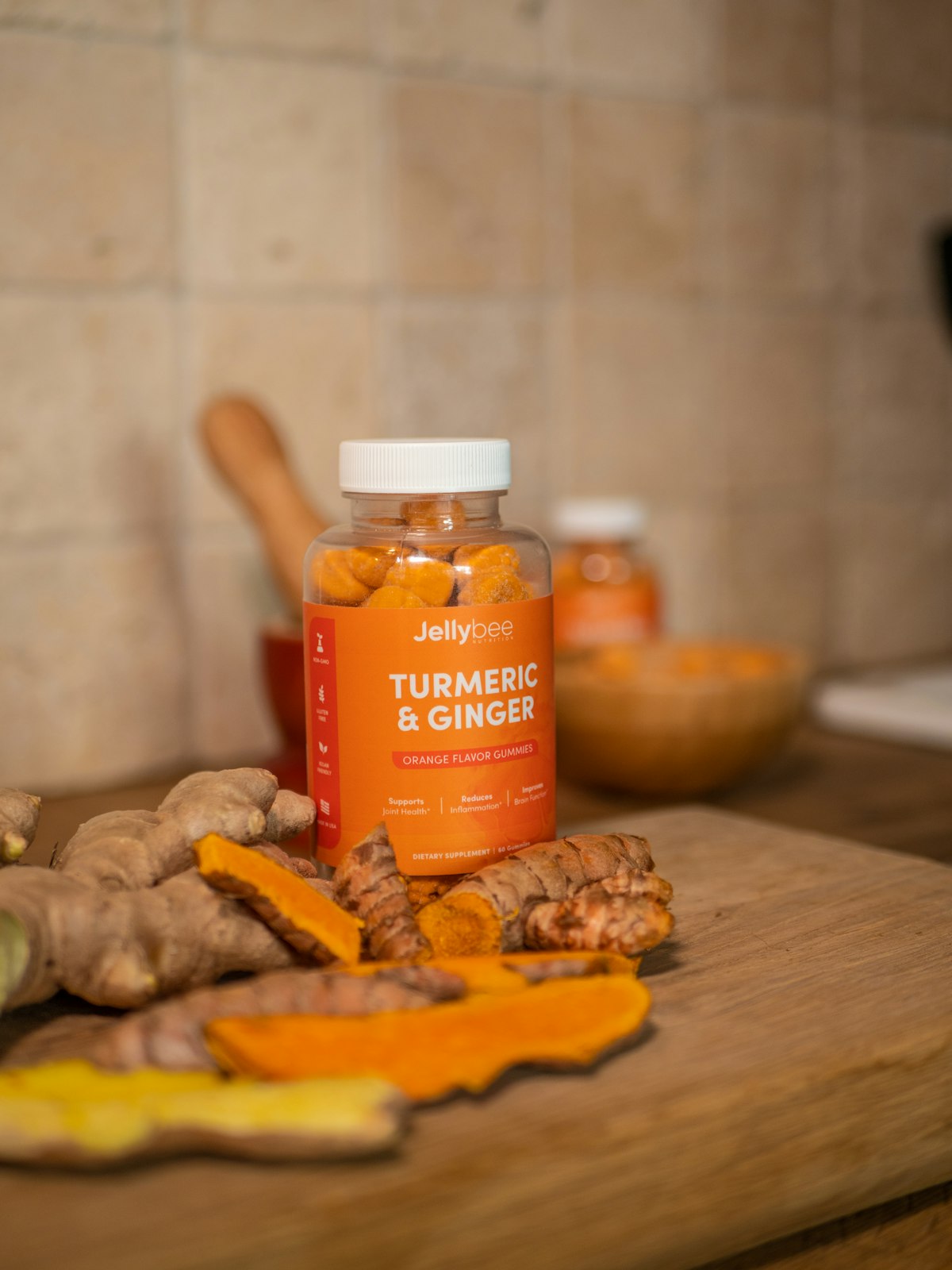
China is the world's largest market for imported food and dietary supplements — and one of the most heavily regulated. For foreign brands, the regulatory environment is the single biggest variable that determines whether you can sell, what you can sell, how you position it, and how long it takes to reach consumers.
The rules are strict, layered across multiple agencies, constantly evolving, and enforced differently depending on which entry channel you choose. A product that sails through customs via cross-border e-commerce might require years of testing and registration through domestic channels. A health claim that is perfectly legal on your home market packaging could trigger a product delisting in China.
This guide covers every regulatory dimension that matters for foreign food and supplement brands — from the CBEC positive list and Blue Hat system to ingredient restrictions, labeling standards, and the latest 2025-2026 enforcement changes.
The Regulatory Landscape: Who Governs What
China's food and supplement regulation is managed by multiple government agencies, each responsible for different aspects of market access, safety, and enforcement.
| Agency | Abbreviation | Jurisdiction |
|---|---|---|
| State Administration for Market Regulation | SAMR | Overall food safety supervision, health food registration, labeling enforcement, recall rules |
| National Medical Products Administration | NMPA | Health food (Blue Hat) registration and filing, product classification |
| General Administration of Customs | GACC | Import inspection, CBEC positive list enforcement, overseas facility registration |
| National Health Commission | NHC | New food ingredient approvals, food safety standards (GB standards), dual-use substance lists |
| Ministry of Commerce | MOFCOM | Trade policy, CBEC pilot zones, cross-border trade agreements |
For most foreign food and supplement brands, the agencies you will interact with most directly are GACC (for customs and facility registration), SAMR/NMPA (for product classification and health food registration), and NHC (indirectly, through ingredient approval status).
Two Paths to Market: CBEC vs. Domestic Registration
Foreign brands entering China's food and supplement market face a fundamental strategic choice: cross-border e-commerce (CBEC) or domestic registration. Each path has radically different regulatory requirements, timelines, costs, and commercial implications.
| Dimension | CBEC (Cross-Border) | Domestic Registration |
|---|---|---|
| Registration required | No Blue Hat required | Blue Hat registration or filing mandatory |
| China entity required | No (work through TP / bonded warehouse) | Yes — WFOE or Joint Venture |
| Clinical trials | Not required | Often required for functional claims |
| Tax rate | 9.1% combined (calculated on retail price) | ~30% (calculated on import price) |
| Labeling | Original language + Chinese e-label | Full Chinese labeling on physical packaging |
| Time to market | 2-4 months | 18 months - 5 years |
| Sales channels | Tmall Global, JD Worldwide, Douyin Global, Kaola | All channels including offline retail, pharmacies, Tmall Classic, JD |
| Per-order limit | 5,000 RMB per transaction, 26,000 RMB/year per person | No limits |
| Best for | Market testing, speed, lower risk | Scale, offline distribution, long-term presence |
Shanghai Jungle Insight
For the vast majority of foreign food and supplement brands entering China, CBEC is the right starting point. It eliminates the need for Blue Hat registration, avoids the requirement for a China entity, and lets you start selling within months rather than years. Domestic registration only makes sense once you have validated demand through cross-border and are ready to invest in offline distribution at scale.
What Food and Supplement Products Can You Sell Via CBEC?
Not every food or supplement product qualifies for cross-border e-commerce import. China maintains a "positive list" — officially the Cross-Border E-Commerce Retail Import Commodity List — that defines which product categories are eligible. Only goods on this list can be imported through the CBEC model.
Food Categories on the Positive List
FoodSupplement Categories on the Positive List
SupplementsImportant Restriction
Products containing ingredients not approved for food use in China, or ingredients classified as pharmaceutical, cannot enter via CBEC regardless of positive list status. NMN (nicotinamide mononucleotide) is explicitly banned from CBEC import as of mid-2025. CBD and THC-containing products are strictly prohibited across all channels.
Per-Transaction Limits
CBEC imports are subject to individual purchase limits: 5,000 RMB per single transaction and 26,000 RMB per person per calendar year. These limits are enforced through identity verification linked to each buyer's government ID.

Blue Hat Registration and Filing: The Domestic Path
The Blue Hat system is China's mandatory approval framework for health foods sold through domestic channels — brick-and-mortar retail, pharmacies, and domestic e-commerce platforms like Tmall Classic and JD.
Registration ("Big Blue Hat")
Required for health foods making specific functional claims. This is the more rigorous path:
- Timeline: 2-5 years from application to approval
- Cost: 60,000-100,000+ RMB per product, often significantly more with testing
- Requirements: Full dossier including product formulation, stability data, safety testing, and often human clinical trials conducted in Chinese laboratories
- Applicant: For imported products, the applicant must be the foreign manufacturer
- Approval rate: Imported products represent less than 1% of total Blue Hat approvals
Filing ("Small Blue Hat")
A simplified pathway for nutritional supplements containing only vitamins and minerals from the approved Health Food Raw Material Directory:
- Timeline: 3-6 months
- Cost: Significantly lower than registration
- Requirements: Formulation must use only pre-approved vitamin and mineral ingredients in approved forms and dosages
- Limitation: Only available for simple vitamin/mineral products — not functional health foods
Industry Trend
Some large international brands now pursue Blue Hat registration for hero products while simultaneously selling their broader catalog via CBEC. This dual-channel strategy is becoming more common among brands with long-term China ambitions.
Which Ingredients Are Restricted or Banned in China?
China maintains strict control over which ingredients can be used in food and supplement products. The regulatory framework is built on several overlapping lists and approval systems.
Key Ingredient Frameworks
Approved Food Ingredients: Only substances on the NHC's approved list can be used. New food ingredients require separate approval — a process that can take 1-3 years. In 2025, the NHC approved 15 new food ingredients and 31 food additives, including D-allulose and three new probiotic strains.
Dual-Use Substances: China maintains a list of substances classified as both food and traditional medicine. In December 2025, a new pilot measure simplified import procedures for 30 of these dual-use substances (including American Ginseng).
Novel Food Ingredients: Any ingredient not traditionally used in China and not on existing approved lists must go through a Novel Food Ingredient application with the NHC.
Commonly Restricted or Prohibited Ingredients
| Ingredient | Status | Notes |
|---|---|---|
| NMN | Banned (CBEC + domestic) | Not approved as food ingredient; CBEC ban enforced mid-2025 |
| CBD / THC | Strictly prohibited | No legal pathway for ingestible CBD products in China |
| Melatonin | Restricted | Classified as pharmaceutical; available only via CBEC with limitations |
| DHEA | Prohibited | Classified as hormonal substance |
| Certain herbal extracts | Case-by-case | Must be on approved food ingredient or dual-use substance list |
| Collagen (fish/bovine) | Permitted | Widely sold via CBEC; specific source documentation required |
| Probiotics | Permitted (strain-dependent) | Must use strains on China's approved list; three new strains added in 2025 |
Shanghai Jungle Insight
Before you invest in China market entry, have your full ingredient list verified against China's approved substance lists. A single unapproved ingredient — even one that is perfectly legal in the US, EU, or Australia — can block your entire product from entering through any channel.
Labeling Requirements: What Must Be on Your Packaging
China's food labeling requirements are among the most detailed in the world. The rules differ significantly depending on whether you sell through CBEC or domestic channels.
Domestic Channel Labeling (GB 7718)
Products sold through domestic channels must comply with GB 7718, updated in March 2025 with full enforcement beginning March 2027:
- Full Chinese-language labeling on both inner and outer packaging
- Product name in Chinese, prominently displayed
- Ingredient list in descending order by weight
- Nutrition facts panel per GB 28050
- Allergen declarations — eight major allergens must be declared
- Production and expiry dates in Chinese date format
- Manufacturer and importer details with Chinese addresses
- Storage conditions
- Country of origin
CBEC Labeling (Simplified)
Cross-border products benefit from relaxed labeling requirements:
- Original-language packaging is acceptable
- A Chinese-language electronic label (e-label) must be displayed on the product listing page
- The e-label must include ingredients, nutrition facts, allergens, expiry, storage, and a consumer warning that the product is a cross-border import
- No need to physically relabel products in China

What Health Claims Are Allowed for Supplements in China?
Health claims regulation is where many foreign brands get into trouble. China draws a hard line between what can be stated about food products, health supplements sold via CBEC, and registered health foods.
Claim Categories
General food (including CBEC supplements without Blue Hat): No health function claims allowed. You cannot state that your product "boosts immunity," "improves sleep," or makes any claim linking your product to a health outcome.
Filed health food (Small Blue Hat): Limited to standardized nutrient function claims. Claims must match pre-approved wording exactly.
Registered health food (Big Blue Hat): Can make one of 27 officially approved functional claims. Claims must use government-mandated wording and cannot be modified.
Universal Prohibitions (All Channels)
- No disease prevention or treatment claims under any circumstances
- No claims that a product can "cure," "treat," or "prevent" any medical condition
- No comparison with pharmaceutical products
- No use of medical terminology or clinical language
- No absolute guarantees of efficacy
- No endorsement by medical institutions or doctors
- No before/after imagery implying medical outcomes
Enforcement Reality
Chinese platforms actively monitor product listings, livestreams, and marketing materials for prohibited health claims. Violations can result in product delisting, store penalties, deposit deductions, or permanent store closure. Platforms like Tmall Global employ both AI scanning and manual review. This happens regularly to foreign brands who translate Western marketing copy without localization.
Testing and Compliance Requirements
Testing requirements vary by channel and product category, but all imported food and supplements face some level of compliance verification.
CBEC Channel Testing
- Customs sampling: GACC conducts random sampling inspections at bonded warehouses
- Product documentation: Certificate of Analysis (CoA), Certificate of Origin, Free Sale Certificate
- GMP certification: Recommended but not always mandatory for CBEC
- Third-party testing: Platforms may require independent test reports for specific categories
Domestic Channel Testing
- CIQ inspection: All imported food must pass China Inspection and Quarantine
- Chinese lab testing: For Blue Hat registration, testing must be conducted in NMPA-designated Chinese laboratories
- Stability testing: Required for health food registration — typically 6-12 months of accelerated stability data
- Clinical trials: Required for most functional health food claims
- Facility registration: Overseas manufacturing facilities must be registered with GACC
Overseas Facility Registration (GACC)
Foreign manufacturers exporting food to China must register with the General Administration of Customs. Key updates:
- GAC Decree No. 280 (effective June 1, 2026) revises the facility registration system, allowing direct applications and batch registration for recognized trading partners
- Registration is valid for five years with automatic renewal
- More than 96,000 food enterprises from 178 countries have registered as of 2025
2025-2026 Regulatory Updates: What Has Changed
China's food and supplement regulatory landscape has seen significant changes in 2025 and early 2026:
KOL Livestream Restrictions (February 2026)
New regulations prohibit the sale of health food, pharmaceuticals, and formula food for special medical purposes through KOL livestreaming. What remains permitted:
- Brand-owned livestreaming (self-broadcast from official store accounts)
- Professional educational content about health products
- KOL endorsement of general food products (not classified as health food)
Tightened CBEC Recall Rules (March 2026)
SAMR has introduced stricter recall and compliance requirements for cross-border e-commerce retail imported food. Platforms and bonded warehouse operators now bear greater responsibility for product safety and traceability.
Updated Labeling Standards (March 2025)
Updated GB 7718 and GB 28050 standards released, with a two-year transition period. Full enforcement begins March 2027.
Simplified Dual-Use Substance Imports (December 2025)
A new pilot measure simplifies customs clearance for 30 substances with both food and traditional medicine use.
New Food Ingredient Approvals (2025)
The NHC approved 15 new food ingredients and 31 food additives in 2025, including D-allulose and three new probiotic strains.
Revised Overseas Facility Registration (June 2026)
GAC Decree No. 280 takes effect, streamlining the registration process for overseas food manufacturers.
Platform-Level Compliance: Beyond Government Regulation
Government regulation sets the floor. E-commerce platforms add their own layer of compliance requirements — and they can be more restrictive than the law requires.
Common Regulatory Mistakes Foreign Brands Make
After working with dozens of food and supplement brands entering China, we consistently see the same regulatory mistakes:
- Translating Western health claims directly. What is legal on your US or EU packaging is often prohibited in China. Every claim must be reviewed against China's specific rules, not just translated.
- Assuming CBEC means no regulation. Cross-border e-commerce reduces requirements — it does not eliminate them. Products still need to be on the positive list, ingredients must be approved, and platform compliance still applies.
- Not verifying ingredient approval status. A single unapproved ingredient can block your entire product line. This should be the very first step in any China strategy.
- Ignoring platform-level rules. Government compliance gets you through customs. Platform compliance gets your product listed. These are two separate hurdles.
- Underestimating labeling complexity. Even for CBEC, the Chinese e-label must be accurate, complete, and compliant.
- Planning around KOL livestreaming for supplements. The February 2026 restrictions mean supplement brands can no longer rely on influencer livestreaming as a primary sales channel.
- Missing facility registration deadlines. Overseas facility registration with GACC is a prerequisite — not something you can do in parallel with other market entry tasks.
Compliance Checklist for Food and Supplement Brands
Use this checklist to assess your regulatory readiness before entering the Chinese market:
Pre-Entry Regulatory Checklist
1. Product Classification
- Determine whether each product is classified as general food, health food, or special dietary food in China
- Confirm CBEC positive list eligibility for each SKU
2. Ingredient Verification
- Cross-reference all ingredients against China's approved food ingredient lists
- Check for prohibited or restricted substances (NMN, CBD, DHEA, melatonin)
- Verify probiotic strains against China's approved strain list
3. Documentation
- Certificate of Analysis (CoA) for each product
- Certificate of Free Sale from home country authority
- Certificate of Origin
- GMP certification (recommended)
- GACC facility registration for manufacturing facility
4. Labeling
- Prepare compliant Chinese e-labels for all CBEC products
- Review all claims for compliance — remove or rephrase any health function claims
- Include allergen declarations, nutrition facts, and storage conditions
5. Platform Readiness
- Prepare brand authorization and trademark documentation
- Compile platform-specific qualification documents for health/supplement category
- Plan marketing strategy around brand self-broadcast (not KOL livestreaming for health products)
How Shanghai Jungle Helps You Navigate Regulatory Complexity
Shanghai Jungle is an official Tmall Partner with locations in Shanghai, Copenhagen, and Stuttgart. Regulatory navigation is at the core of what we do — because for food and supplement brands, getting the regulatory foundation right is what everything else depends on.
- Ingredient screening: We verify your full ingredient list against China's approved substance lists before you commit to a market entry strategy
- Product classification: We determine the correct regulatory category for each SKU and identify the optimal entry pathway
- Positive list verification: We confirm your products are eligible for CBEC import and flag any items that need alternative approaches
- Labeling compliance: We prepare compliant Chinese e-labels and review all product claims for regulatory alignment
- Documentation support: We guide the preparation of all required certificates and registration documents
- Platform onboarding: We handle the category-specific qualification and review process on Tmall Global, JD Worldwide, and Douyin
- Ongoing compliance monitoring: We track regulatory changes and proactively flag issues that affect your product catalog
Frequently Asked Questions
Do I need Blue Hat registration to sell supplements in China?
Not if you sell through cross-border e-commerce platforms like Tmall Global or JD Worldwide. CBEC allows you to sell supplements without Blue Hat registration, though your products must be on the CBEC positive list and use approved ingredients. Blue Hat is only required for domestic channels — offline retail, pharmacies, and domestic e-commerce.
Can I use the same health claims in China that I use in the US or EU?
Almost certainly not. China's health claims regime is significantly more restrictive. Products sold via CBEC cannot make any health function claims at all. Even Blue Hat-registered products are limited to 27 pre-approved functional claims using mandatory wording. All Western marketing copy must be reviewed and localized for Chinese regulatory compliance.
How long does it take to start selling food or supplements in China via CBEC?
Typically 2-4 months from the start of the process, assuming your products are on the positive list and use approved ingredients. This includes documentation preparation, platform application, store setup, and product listing review. Domestic registration, by contrast, takes 18 months to 5 years.
What happens if my product contains an ingredient not approved in China?
The product will be blocked from entering China through any channel. You have three options: reformulate the product to remove the unapproved ingredient, apply for Novel Food Ingredient approval with the NHC (a lengthy process), or choose not to sell that particular product in China and focus on SKUs that are already compliant.
Can influencers still promote my supplement products on Douyin?
As of February 2026, KOL (influencer) livestreaming is prohibited for health food, pharmaceuticals, and formula food for special medical purposes. Brand-owned livestreaming from your official store account is still permitted, as is professional educational content.
Is my overseas manufacturing facility already registered with China customs?
You can check the GACC registry online. If your facility is not registered, this needs to be completed before you can export food products to China. The process has been streamlined under GAC Decree No. 280 (effective June 2026), which allows direct application and introduces batch registration for recognized trading partners.