
How to Market Health Supplements on Xiaohongshu
How to Market Health Supplements on Xiaohongshu
Xiaohongshu (Little Red Book) is where Chinese consumers research supplements before buying. Here's how foreign brands can build awareness, navigate health claim restrictions, and drive sales through KOC seeding and paid ads.
Why Xiaohongshu Is the #1 Platform for Supplement Brands
China's health supplement market is booming — driven by rising health awareness, post-pandemic wellness habits, and a generation of consumers who view preventive health as a lifestyle investment. With over 300 million monthly active users, Xiaohongshu (Little Red Book) has become the primary discovery and research platform for supplements in China.
300M+ Monthly Users
Xiaohongshu's active user base skews toward urban women aged 25–40 in Tier 1 and Tier 2 cities — the highest-spending segment of China's supplement market.
70%+ Pre-Purchase Search
Over 70% of Chinese consumers search for a supplement brand on Xiaohongshu before making a purchase on Tmall or JD.
Search-Driven Discovery
Consumers actively search for health concerns — "best collagen supplement," "vitamin D for immunity" — making the platform function like a health-focused search engine with built-in social proof.
Content-to-Commerce Pipeline
Users discover supplements through content, research through reviews, and purchase directly through Xiaohongshu's integrated e-commerce or follow the trail to Tmall Global.
For foreign supplement brands, Xiaohongshu is the platform where brand perception is built or broken. A brand without a Xiaohongshu presence is essentially invisible to the most valuable segment of Chinese supplement consumers.
Content Formats That Drive Supplement Sales
Not all content performs equally on Xiaohongshu for supplements. The platform's algorithm and user behavior favor specific formats that balance educational value with authentic personal experience.
Ingredient Breakdowns
Educational posts explaining what an ingredient does, why it matters, and how it compares to alternatives. Chinese consumers are ingredient-literate and want depth.
Daily Routine Posts
"My morning supplement routine" posts contextualize your product within a real lifestyle — not as an isolated product, but as part of a wellness system.
Before-and-After Journeys
Personal transformation stories — improved skin after 3 months of collagen, better sleep with magnesium. Must be authentic and avoid medical claims.
Carousel Comparisons
Multi-slide posts comparing 3–5 products within a category generate high engagement and saves, becoming reference material users return to.
Short Video (30–90s)
Unboxing, taste tests, and "what's in my supplement cabinet" tours. Xiaohongshu's algorithm increasingly favors video content.
What Health Claims Can You Make on Xiaohongshu?
This is where many foreign supplement brands make costly mistakes. China has strict regulations about health claims in marketing content, and Xiaohongshu actively enforces these rules. Content that violates health claim restrictions can be suppressed, removed, or result in account penalties.
What You Cannot Say
- Medical claims: "Cures," "treats," "prevents disease," or any language that positions a supplement as a medical treatment
- Guaranteed results: "You will see results in 7 days" or "100% effective" — absolute efficacy claims are not permitted
- Disease-specific claims: "For diabetes," "helps with cancer prevention," or other disease-related messaging
- Exaggerated functional claims: "Makes you look 10 years younger" or "instantly boosts energy by 200%"
What You Can Say (With Care)
- General wellness benefits: "Supports immune health," "helps maintain healthy skin," "contributes to daily nutritional needs"
- Ingredient-focused education: "Vitamin C is known to support immune function" — framing claims as ingredient science rather than product promises
- Personal experience (from KOCs): "After taking this for 2 months, I noticed my skin felt more hydrated" — first-person anecdotal sharing is more acceptable than brand-made efficacy claims
- Certification and quality: "GMP-certified facility," "third-party tested," "no artificial additives"
The safest approach: let KOCs share personal experiences while your brand account focuses on ingredient education, quality credentials, and lifestyle content. This distributes the messaging risk and feels more authentic to Xiaohongshu's audience.
KOC Seeding: The Most Effective Supplement Marketing Approach
KOC (Key Opinion Consumer) seeding — called "种草" (zhǒng cǎo, literally "grass planting") in Chinese — is the most effective marketing approach for supplements on Xiaohongshu. KOCs are everyday consumers with smaller followings (1K–50K followers) who create authentic, experience-based content.
Why KOCs Outperform KOLs for Supplements
- Higher trust. Supplement consumers are skeptical of paid endorsements. KOC content reads as genuine peer recommendation, which carries more weight for health-related purchasing decisions
- Better ROI. KOC campaigns on Xiaohongshu typically deliver 2–3x better return on investment compared to equivalent-spend KOL campaigns for supplement brands
- Search volume building. 30–50 KOC posts create a rich library of branded content that surfaces when consumers search for your brand name, product category, or related health topics
- Long-tail visibility. KOC posts continue to appear in search results for months, unlike paid ads that stop the moment you stop paying
How to Structure a KOC Seeding Campaign
- Identify 30–50 health and wellness KOCs with 1K–50K followers, genuine engagement (not bought followers), and content history in supplements, skincare, or wellness
- Send product packages with a brief guide — not a script. Include key talking points about ingredients and quality, but let KOCs share in their own voice
- Allow 2–4 weeks for KOCs to try the product before posting. Authentic "I've been using this for X weeks" content is far more credible than day-one unboxing posts for supplements
- Stagger posting over 3–4 weeks rather than publishing all at once. This creates a sustained wave of content that signals organic buzz to Xiaohongshu's algorithm
- Monitor and amplify top-performing KOC posts using Xiaohongshu's Pugongying ad platform to extend their reach
Influencer Selection: Health Creators vs. Lifestyle Creators
Choosing the right influencers for supplement marketing on Xiaohongshu requires balancing reach, relevance, and credibility. The two main categories to consider:
| Factor | Health & Wellness Creators | Lifestyle & Beauty Creators |
|---|---|---|
| Profile | Nutritionists, fitness coaches, TCM practitioners, health education accounts | Beauty, skincare, and lifestyle KOLs who incorporate supplements into broader content |
| Audience | Highly targeted — people actively seeking health information with higher conversion intent | Wider reach — followers accustomed to product recommendations with higher baseline purchase intent |
| Best for | Premium supplements, clinical-grade products, science-backed positioning | Beauty-from-within products (collagen, biotin), general wellness, younger consumers |
| Rates | Often higher due to specialized expertise and smaller audiences | More competitive pricing with larger audience reach |

The Ideal Mix
Most successful supplement campaigns use a pyramid approach: 2–3 mid-tier health KOLs (50K–500K followers) for credibility and reach, supported by 30–50 lifestyle and wellness KOCs for volume and authentic social proof. The KOLs create the "halo" content, while the KOC volume builds the search foundation.
Hashtag and Keyword Strategy for Supplement Content
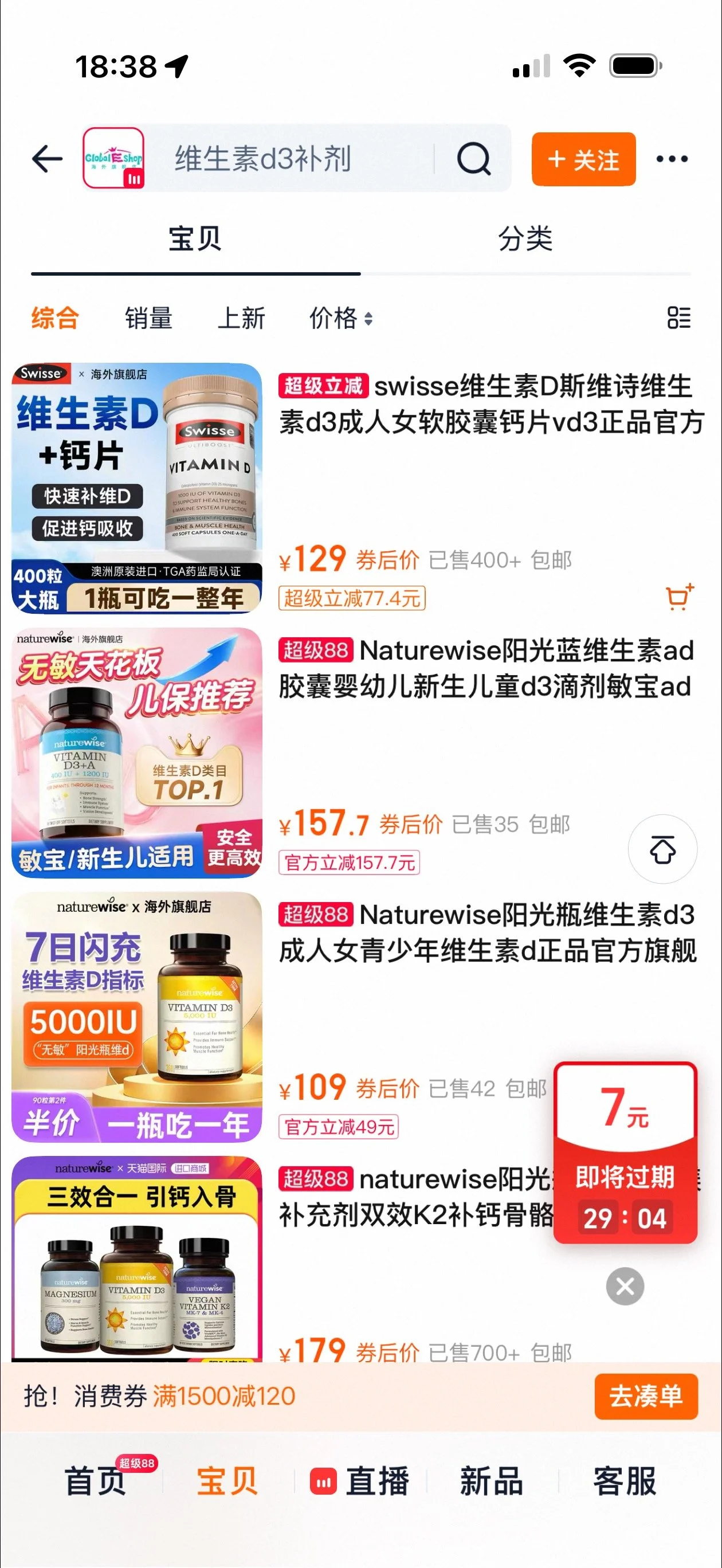
Xiaohongshu functions partly as a search engine, and supplement consumers are active searchers. Your hashtag and keyword strategy directly impacts content discoverability.
High-Performing Hashtag Categories
- Category hashtags: #保健品 (health products), #营养补充剂 (nutritional supplements), #维生素 (vitamins)
- Concern-based hashtags: #提高免疫力 (boost immunity), #改善睡眠 (improve sleep), #美容养颜 (beauty from within)
- Ingredient hashtags: #胶原蛋白 (collagen), #鱼油 (fish oil), #益生菌 (probiotics), #NMN
- Format hashtags: #好物推荐 (good product recommendation), #开箱 (unboxing), #我的日常 (my daily routine)
- Brand-specific hashtags: Create a branded hashtag and encourage KOCs to use it for campaign tracking
Keyword Optimization Tips
- Include your primary keyword naturally in the first 2 lines of the post — this is what appears in search previews
- Use a mix of broad category keywords and specific long-tail terms
- Study what competitors rank for by searching category terms and analyzing the top-performing posts
- Update your keyword strategy monthly based on trending search terms in the health category
Pugongying Ad Platform: Paid Amplification That Works
Xiaohongshu's Pugongying (蒲公英, "Dandelion") platform is the official influencer marketing and ad amplification tool. For supplement brands, it's essential for scaling successful organic content.
How to Use Pugongying Effectively
- Amplify top KOC posts. Identify your best-performing organic KOC content (by engagement rate, save rate, and comment quality) and boost it through Pugongying. This extends proven content to a broader audience at a fraction of the cost of creating new paid content
- Target by interest and behavior. Pugongying allows targeting based on user interests (health, beauty, fitness), behavior (searched for supplement terms), demographics, and geographic location
- Information flow ads. Native-looking ads that appear in the user's feed alongside organic content. These perform best when they use the same authentic, personal style as organic KOC content — not polished brand creative
- Budget allocation. Start with ¥500–1,000 per day per boosted post. Test 3–5 posts simultaneously and shift budget toward the best performers after 3–5 days of data
Search Ads: Capturing High-Intent Supplement Shoppers
Xiaohongshu's search ad platform allows brands to bid on keywords and appear at the top of search results. For supplements, this is incredibly valuable because users who search for specific health terms have high purchase intent.
Brand Defense Keywords
Bid on your own brand name to ensure you own the top search position. Competitors will target your brand name if you don't.
Category Keywords
Bid on broad category terms like "collagen supplement," "probiotics recommendation," "best fish oil."
Concern-Based Keywords
Target health concern searches like "supplements for hair loss," "vitamins for energy," "immune support supplements."
Competitor Keywords
Bid on competitor brand names to capture comparison shoppers — a common and accepted practice on Xiaohongshu.
Search ads on Xiaohongshu are CPC (cost-per-click) based. Expect CPCs of ¥2–8 for supplement keywords, depending on competition. The key to good search ad ROI is landing users on high-quality content (not just your store) — because Xiaohongshu users want information, not just a product listing.
Building Your Brand Account: Content Pillars and Posting Cadence
Your official Xiaohongshu brand account serves a different function than KOC content. While KOCs build social proof, your brand account establishes authority, provides reference information, and serves as the "official source" when consumers research your products.

Content Pillars for Supplement Brand Accounts
- Ingredient education (40%): Deep dives into key ingredients, sourcing, and science. This positions your brand as knowledgeable and transparent
- Product and quality (25%): Manufacturing process, certifications (GMP, third-party testing), origin stories, quality control
- Lifestyle and wellness (20%): Wellness tips, seasonal health advice, routine suggestions that naturally feature your products
- Community and social proof (15%): Repost and feature top KOC content, customer testimonials, user-submitted routines
Posting Cadence
Aim for 3–5 posts per week from your brand account. Consistency matters more than volume on Xiaohongshu — the algorithm rewards accounts that post regularly over those that post in bursts. Mix formats: 60% image carousels, 30% short video, 10% text-heavy educational posts.
Engage actively with comments on your posts. Xiaohongshu's algorithm weighs comment interaction heavily, and supplement consumers often ask detailed questions about ingredients, dosage, and compatibility with other supplements. Thoughtful, knowledgeable replies build trust and boost post visibility.
How Much Does It Cost to Market Supplements on Xiaohongshu?
Here's a realistic budget framework for a foreign supplement brand launching on Xiaohongshu:
Phase 1: Foundation (Months 1–2)
¥30,000–50,000. Brand account setup and content creation (20–30 initial posts), KOC recruitment and product seeding (30–50 KOCs), content strategy development and compliance review.
Phase 2: Launch (Months 3–4)
¥40,000–80,000/month. KOC content publication wave (staggered over 3–4 weeks), initial Pugongying ad spend, search ad campaigns on core keywords, first mid-tier KOL collaboration (1–2 health/wellness KOLs).
Phase 3: Scale (Months 5–8)
¥60,000–120,000/month. Ongoing KOC seeding (10–15 new KOCs per month), expanded paid advertising, seasonal campaign tie-ins (Double 11, 6.18), content refresh and new product launches.
Total first-year Xiaohongshu investment for a focused supplement launch: approximately ¥500,000–1,000,000 (€60,000–120,000). This is separate from Tmall Global store costs and other platform spending. The investment pays back through branded search volume, conversion rate improvements on Tmall, and long-tail organic content that continues working for months after publication.
Launch Your Supplement Brand on Xiaohongshu
Get a platform-specific marketing strategy for your health supplement brand in China.
- KOC seeding campaigns and influencer selection
- Xiaohongshu content strategy and compliance review
- Pugongying and search ad management

"We help foreign supplement brands build presence on Xiaohongshu — integrated with Tmall Global operations for maximum impact."— Shanghai Jungle
Frequently Asked Questions
Can foreign supplement brands sell directly on Xiaohongshu?
Yes. Xiaohongshu has its own e-commerce functionality, including cross-border options. However, most foreign supplement brands use Xiaohongshu primarily for brand building and content marketing, while driving transactions to their Tmall Global flagship store where the purchase infrastructure is more established and consumer trust is higher for supplements.
How many KOC posts do I need before launching my supplement on Tmall?
Aim for 30–50 KOC posts published on Xiaohongshu before your Tmall Global store launch or major campaign. This creates a baseline of searchable, authentic content that consumers will find when they research your brand. More posts mean better search coverage and stronger social proof at the point of purchase.
What happens if my supplement content violates health claim rules?
Violations can range from content suppression (reduced visibility in feed and search) to post removal and account penalties. Repeated violations may result in account restrictions or suspension. Xiaohongshu uses automated content scanning to detect health claim language, so violations can be flagged even on KOC posts — which is why proper briefing and compliance review are essential.
Should I use KOLs or KOCs for supplement marketing on Xiaohongshu?
Both, but with different roles. KOCs (30–50) form the foundation of your content strategy — building search volume, social proof, and authentic reviews. 2–3 mid-tier KOLs (50K–500K followers) in the health or wellness space add credibility and reach. Budget-wise, allocate 60–70% to KOC seeding and 30–40% to KOL collaborations.
How long does it take to see results from Xiaohongshu supplement marketing?
Expect 2–3 months before you see meaningful branded search volume and Tmall conversion improvements. Xiaohongshu content has a longer shelf life than most social platforms — individual posts can continue driving traffic for 6–12 months. The first 3 months are an investment phase; months 4–8 is when ROI starts compounding as your content library grows.