
Health Supplement Market in China: What's Selling and Why
Health Supplement Market in China: What's Selling and Why
China's health supplement market is one of the fastest-growing consumer categories in the world. Here's what's driving demand, which products are selling, and how foreign brands can enter through cross-border e-commerce — without Blue Hat registration.
 Shanghai Jungle · March 2026 · 15 min read
Market Overview: Size, Growth, and Trajectory
China's health supplement market is massive and growing rapidly. The market reached approximately RMB 387.9 billion in 2023, and the dietary supplements segment alone — estimated at USD 25.9 billion in 2024 — is projected to reach USD 46.6 billion by 2030, growing at a compound annual growth rate of 10.4%. In the first half of 2025, the market hit CN¥ 60.4 billion, representing a 16.2% year-over-year increase.
Within the broader category, vitamins and dietary supplements (VDS) account for the largest share at 58.1% of the total market, valued at RMB 225.3 billion. Herbal and traditional supplements represent 35.8% at RMB 138.7 billion. Sports nutrition and weight management are smaller but rapidly growing segments.
Several structural factors are driving this growth: an aging population with increasing healthcare needs, a younger generation embracing proactive wellness, rising disposable incomes, and deep consumer trust in imported supplement brands. For foreign brands, China represents one of the most compelling growth opportunities in the global health supplement industry.
What Health Supplements Sell Best in China?

Understanding which categories and ingredients are driving sales is essential for foreign brands evaluating their China market fit. The following segments represent the strongest consumer demand:
Vitamins and Minerals
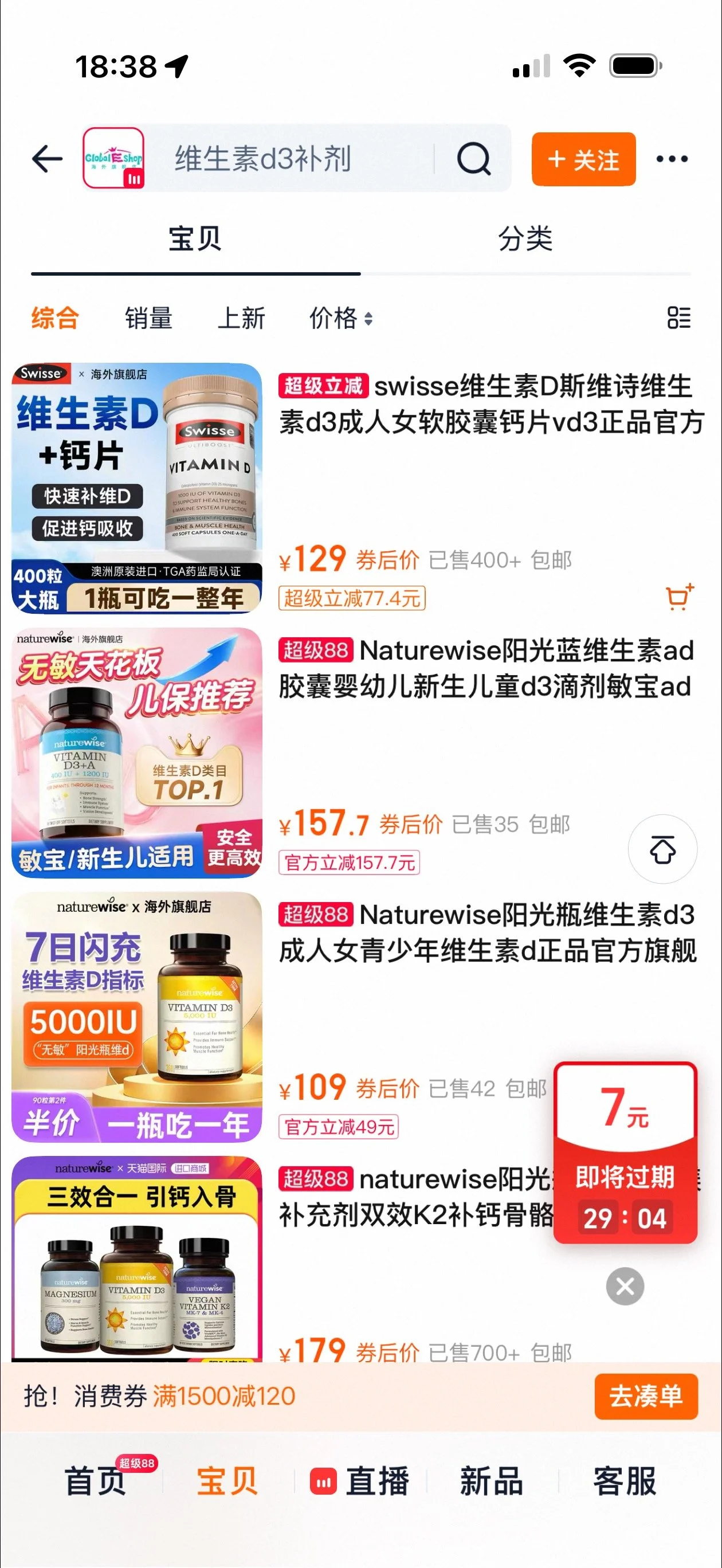
The foundational category. Vitamin C, vitamin D, calcium, and multivitamins remain consistent bestsellers. Demand is driven by both older consumers focused on bone health and immunity, and younger consumers building daily wellness routines. Portable, convenient formats — sachets, gummies, and effervescent tablets — outperform traditional pill forms.
Immunity and Respiratory Health
Post-pandemic awareness permanently elevated consumer interest in immune support products. Ingredients like elderberry, zinc, echinacea, and propolis have moved from niche to mainstream. Foreign brands with clinically backed immunity formulations have a strong competitive edge.
Collagen and Beauty Supplements
The "beauty from within" segment is thriving. Collagen peptides, hyaluronic acid supplements, and antioxidant formulations are particularly popular among female consumers aged 25–40. This category benefits from the broader skincare culture in China, where consumers already invest heavily in topical products and are receptive to ingestible alternatives.
Joint Health and Mobility
Glucosamine, chondroitin, and MSM-based products are in high demand from China's large and growing elderly population. Brands like Move Free have established strong market positions in this segment. Foreign brands with clinical evidence and recognizable ingredients have a clear pathway.
Probiotics and Digestive Health
Gut health awareness is rising rapidly in China. Probiotic supplements — particularly those targeting digestive comfort, immune support, and skin health — are growing at double-digit rates. Strain specificity and clinical documentation are increasingly important to Chinese consumers.
Sports Nutrition and Protein
While still a smaller segment, sports nutrition is accelerating. Protein powder sales surged on JD.com, and demand for performance and recovery supplements is growing alongside China's expanding fitness culture. Foreign brands with established credibility in Western markets can leverage this reputation effectively.
Who Is Buying Health Supplements in China?
China's supplement consumer base is broader and younger than many foreign brands expect. While older consumers remain a significant segment, the fastest growth is coming from younger demographics.
Young Wellness Enthusiasts (18–35)
This cohort drives much of the category's growth momentum. They approach supplements as part of a proactive wellness lifestyle — not as a response to health problems. Popular products include multivitamins, probiotics, collagen, and sleep support supplements. They discover products primarily through Little Red Book (Xiaohongshu) and Douyin, and they expect brands to communicate with ingredient transparency and scientific backing.
Middle-Aged Health Managers (35–55)
This segment focuses on preventive health. Demand centers on cardiovascular support, joint health, cognitive function, and immune maintenance. They are often purchasing for both themselves and their parents, making them a dual-decision-maker segment. Brand trust and perceived quality are paramount.
Elderly Consumers (55+)
The traditional core of the supplement market. Focused on bone health, immunity, cardiovascular support, and general vitality. This segment is more likely to purchase through offline channels or mainstream e-commerce platforms like JD.com, where trust in product authenticity is highest.
Across all demographics, a consistent pattern emerges: Chinese consumers trust foreign supplement brands. Overseas brands like Swisse, Blackmores, and Move Free have consistently ranked among the top sellers, benefiting from perceptions of higher quality standards and safer ingredients. This trust advantage is a structural asset for foreign brands entering the market.
How Do You Register Health Supplements for Sale in China?
Understanding China's supplement regulatory framework is critical — it determines which market entry route is feasible and how quickly you can start selling.
The Blue Hat System
China classifies health supplements as "health food" (保健食品), which requires formal approval from SAMR (State Administration for Market Regulation). Approved products receive the distinctive "Blue Hat" label (蓝帽子), which signals to consumers that the product has been vetted and approved for sale in China.
There are two pathways to Blue Hat approval:
- Registration: Required for products claiming specific health functions (immunity enhancement, memory improvement, etc.). This is a lengthy process that can take 2–3 years and involves clinical testing, stability studies, and extensive documentation.
- Filing: A simpler pathway available for products that only supplement vitamins or minerals using ingredients from China's approved catalogue. Filing typically takes 3–6 months.
CBEC: The Fast Track for Foreign Brands
Cross-border e-commerce has transformed the market entry equation for foreign supplement brands. Under the CBEC model, brands can sell directly to Chinese consumers through platforms like Tmall Global and JD Worldwide without obtaining Blue Hat registration. This eliminates the most significant barrier to entry — a multi-year, six-figure regulatory process.
CBEC supplements are subject to a consolidated tax rate of approximately 9.1%, applied to the retail/sales price. In contrast, general trade imports incur taxes calculated on the CIF (cost, insurance, freight) price, including customs duties, VAT, and potentially consumption tax. For most foreign brands, CBEC offers a faster, lower-risk, and more cost-effective entry route.
Key CBEC requirements for supplements include:
- The product must be on China's cross-border e-commerce positive list
- The product must be legally marketed in its country of origin
- Per-consumer purchase quantities are limited (typically RMB 5,000 per transaction, RMB 26,000 annual cap)
- Chinese-language product information must be included in the online listing (physical label translation is not required)
General Trade: Full Market Access
For brands that have achieved product-market fit through CBEC and want to expand into offline retail, general trade registration provides full market access. This requires Blue Hat approval, a Chinese entity or local distributor, and full compliance with Chinese labeling and testing requirements. General trade is typically a year-two-and-beyond strategy for brands that have validated demand through cross-border channels.
Platform Strategy: Where Supplements Are Sold
China's supplement market is heavily e-commerce driven. Choosing the right platform — and understanding how each one functions within the consumer journey — is a critical strategic decision.

Tmall Global
Tmall Global is the dominant cross-border e-commerce platform for health supplements in China, commanding approximately 38% of the import e-commerce market. It offers the highest visibility, the most sophisticated promotional tools (Double 11, 618, etc.), and the strongest consumer trust for imported products. A Tmall Global Flagship Store is widely regarded as a mark of legitimacy by Chinese consumers.
JD Worldwide
JD.com's cross-border platform holds approximately 19% market share and is particularly strong in health and nutrition categories. JD's user base skews slightly more male and affluent, making it effective for sports nutrition and premium supplement brands. JD's logistics infrastructure is industry-leading, which is a meaningful advantage for temperature-sensitive or time-critical supplement products.
Little Red Book (Xiaohongshu)
Little Red Book (Xiaohongshu) is the primary discovery platform for supplement consumers. Health and wellness content — ingredient explainers, routine recommendations, before-and-after testimonials — performs exceptionally well. For foreign supplement brands, building a presence on Little Red Book (Xiaohongshu) before launching on Tmall Global is essential for priming consumer demand.
Douyin
Douyin is emerging as a significant sales channel for supplements, particularly through livestream commerce and short-form educational content. Health-focused KOLs and wellness influencers can drive substantial volume during live sessions, especially for products with clear functional benefits that can be demonstrated or explained visually.
Competitive Landscape: Foreign Brand Advantage
Health supplements is one of the few categories in China where foreign brands maintain a clear structural advantage over domestic competitors. Chinese consumers consistently express higher trust in imported supplements — a sentiment rooted in perceptions of stricter quality standards, better ingredient sourcing, and stronger regulatory oversight in Western markets.
Leading foreign brands in China include Swisse (Australia), Blackmores (Australia), Move Free (US), Nature Made (US), and Centrum (US). These brands have established strong market positions through a combination of product quality, consistent marketing investment, and effective platform operations.
However, the competitive landscape is evolving. Chinese domestic brands are improving their formulations, investing in clinical research, and leveraging their inherent advantages in speed, pricing, and platform integration. For foreign brands, the trust advantage is a depreciating asset — it provides a window of opportunity, but sustained success requires continuous investment in brand building, product innovation, and consumer engagement.
For mid-sized foreign supplement brands entering China for the first time, the competitive environment is actually favorable. The market is large enough to absorb new entrants, consumer appetite for imported products remains strong, and CBEC has eliminated the most significant regulatory barriers. The key is executing well on platform strategy, content marketing, and operational efficiency.
Marketing Health Supplements in China
Marketing supplements in China requires a content-led approach that builds trust, educates consumers, and demonstrates credibility. The regulatory environment imposes strict limits on health claims — brands cannot make disease-prevention or treatment claims for products sold as supplements — which means marketing must focus on wellness, lifestyle, and ingredient education.
Content Strategy on Little Red Book (Xiaohongshu)
The most effective supplement content on Little Red Book (Xiaohongshu) focuses on ingredient education, daily wellness routines, comparison reviews, and authentic user experiences. Partnering with health-focused KOLs — nutritionists, fitness trainers, and wellness lifestyle creators — delivers strong engagement and credibility. Micro-KOLs with highly engaged, health-conscious audiences often outperform larger influencers in this category.
Livestream Commerce
Livestream shopping on Douyin and Taobao Live is a powerful conversion channel for supplements. The format allows hosts to explain ingredients, demonstrate products, answer consumer questions in real time, and offer limited-time promotions. Brands that partner with health-focused livestream hosts can generate significant sales volume during single sessions.
Claim Compliance
All marketing materials must comply with China's advertising law and health food regulations. Avoid explicit disease claims, exaggerated efficacy statements, or endorsements from medical professionals that imply clinical treatment. Focus messaging on general wellness, ingredient quality, country-of-origin credibility, and lifestyle benefits.
Pricing Strategy and Consumer Expectations
Pricing health supplements for the Chinese market requires balancing premium positioning with competitive reality. Chinese consumers are willing to pay premium prices for imported supplements — but they are also highly price-aware and comparison-shop across platforms.

Key pricing considerations:
- Build in CBEC tax. The ~9.1% CBEC tax rate applied to the retail price should be factored into your pricing model. Most brands absorb this into their margin rather than adding it as a visible surcharge.
- Benchmark carefully. Compare your pricing against established competitors (Swisse, Blackmores, Nature Made) and monitor pricing on Tmall Global, JD, Hainan duty-free, and daigou channels. Price parity across channels builds consumer confidence.
- Bundle strategically. Multi-bottle bundles and subscription-style packs (e.g., 90-day supply) increase average order value and improve customer lifetime value. "Buy 2 get 1" and gift-with-purchase promotions are effective during major shopping festivals.
- Protect pricing integrity. Avoid deep discounting that erodes brand perception. Limited-time promotional pricing during Double 11 or 618 is expected, but year-round discounting signals low value.
Logistics and Fulfillment Considerations
Supplement logistics in China require attention to product stability, shelf life, and cold chain requirements for certain formulations.
Bonded Warehouse Fulfillment
For bestselling SKUs with predictable demand, pre-shipping inventory to a bonded warehouse in China (typically in free trade zones like Hangzhou, Zhengzhou, or Guangzhou) enables 2–5 day domestic delivery. This significantly improves customer experience and conversion rates compared to direct international shipping.
Direct Shipping
For newer or slower-moving products, direct shipping from overseas warehouses reduces inventory risk. Delivery times are longer (typically 7–14 days), but this model allows brands to test products without committing to bulk inventory in China.
Temperature-Sensitive Products
Probiotics, certain liquid supplements, and products with stability concerns may require temperature-controlled logistics. Working with a logistics partner experienced in supplement cold chain is essential for maintaining product integrity through the shipping and warehousing process.
Your China Supplement Market Entry Roadmap
Entering China's health supplement market through CBEC is a proven pathway. Here is a practical sequence for foreign brands:
- Product assessment and compliance check. Verify that your products are on China's CBEC positive list and meet ingredient requirements. Ensure all products are legally marketed and registered in your home country. This step typically takes 2–4 weeks.
- Platform selection and partner engagement. Choose Tmall Global as your primary platform. Engage an experienced Tmall Partner (TP) to manage store setup, compliance, content creation, and day-to-day operations. Evaluate JD Worldwide as a secondary channel.
- Little Red Book (Xiaohongshu) seeding (months 1–3). Begin building brand awareness through KOL partnerships and ingredient education content on Little Red Book (Xiaohongshu). Send product samples to health and wellness influencers. Create content that positions your brand's country-of-origin quality and ingredient transparency.
- Store launch (months 2–3). Launch your Tmall Global flagship store with 3–5 core SKUs. Lead with your strongest products in the most commercially proven categories. Set up bonded warehouse fulfillment for your expected bestsellers.
- Douyin content expansion (months 3–6). Develop short-form video content and explore livestream commerce partnerships. Build a content cadence that sustains visibility between major shopping festivals.
- Optimize and scale (months 6–12). Use sales data and consumer feedback to refine your product assortment, pricing, and marketing strategy. Expand your SKU range based on demand signals. Evaluate whether Blue Hat registration makes sense for your top sellers to unlock general trade distribution.
Frequently Asked Questions
Are there ingredients that are restricted or banned in Chinese health supplements?
Yes. China maintains a catalogue of permitted ingredients for health food products. Ingredients outside this list — including certain botanical extracts, amino acids, and novel compounds — may be restricted or require special approval. Products sold via CBEC have more flexibility since they follow the regulations of the country of origin, but they must still appear on China's cross-border positive list. Always verify ingredient compliance before committing to a market entry strategy.
Can I sell supplements in China without a local partner or entity?
Through CBEC, yes. Foreign brands can sell directly to Chinese consumers on platforms like Tmall Global without establishing a Chinese legal entity (WFOE) or obtaining a domestic import license. You will, however, need a Tmall Partner (TP) to manage your store operations, and a logistics partner to handle bonded warehouse or direct shipping fulfillment. For general trade distribution, a local entity or licensed distributor is required.
What does it cost to enter China's supplement market through CBEC?
Costs vary depending on platform choice, inventory strategy, and marketing investment. Typical first-year costs for a Tmall Global launch include platform deposits and fees (RMB 50,000–150,000), Tmall Partner management fees, initial inventory and bonded warehouse logistics, and marketing spend on Little Red Book (Xiaohongshu) and Douyin. Most mid-sized brands budget USD 80,000–200,000 for the first 12 months, including platform setup and initial marketing.
How do Chinese consumers research and choose supplement brands?
Discovery typically starts on Little Red Book (Xiaohongshu) or Douyin, where consumers read ingredient breakdowns, routine recommendations, and peer reviews. They then compare products and pricing on Tmall Global or JD.com before purchasing. Country of origin, clinical backing, ingredient transparency, and peer reviews are the most influential factors. Brand trust is built through consistent content and KOL endorsements — not traditional advertising.
What are the tax implications of selling supplements through CBEC vs. general trade?
CBEC products are taxed at a consolidated rate of approximately 9.1%, calculated on the retail price. General trade imports are taxed on the CIF (cost, insurance, freight) value and include customs duties (typically 5–20% for supplements), 13% VAT, and potentially consumption tax. For most foreign supplement brands, CBEC offers a significantly lower effective tax burden — especially on premium-priced products where the CIF-based calculation would be higher.
Ready to Sell Supplements in China?
Shanghai Jungle is an official Tmall Partner specializing in health supplement market entry for foreign brands. We handle compliance, platform setup, marketing, logistics, and ongoing store operations — so you can focus on your product and grow your China business.
Get in Touch →